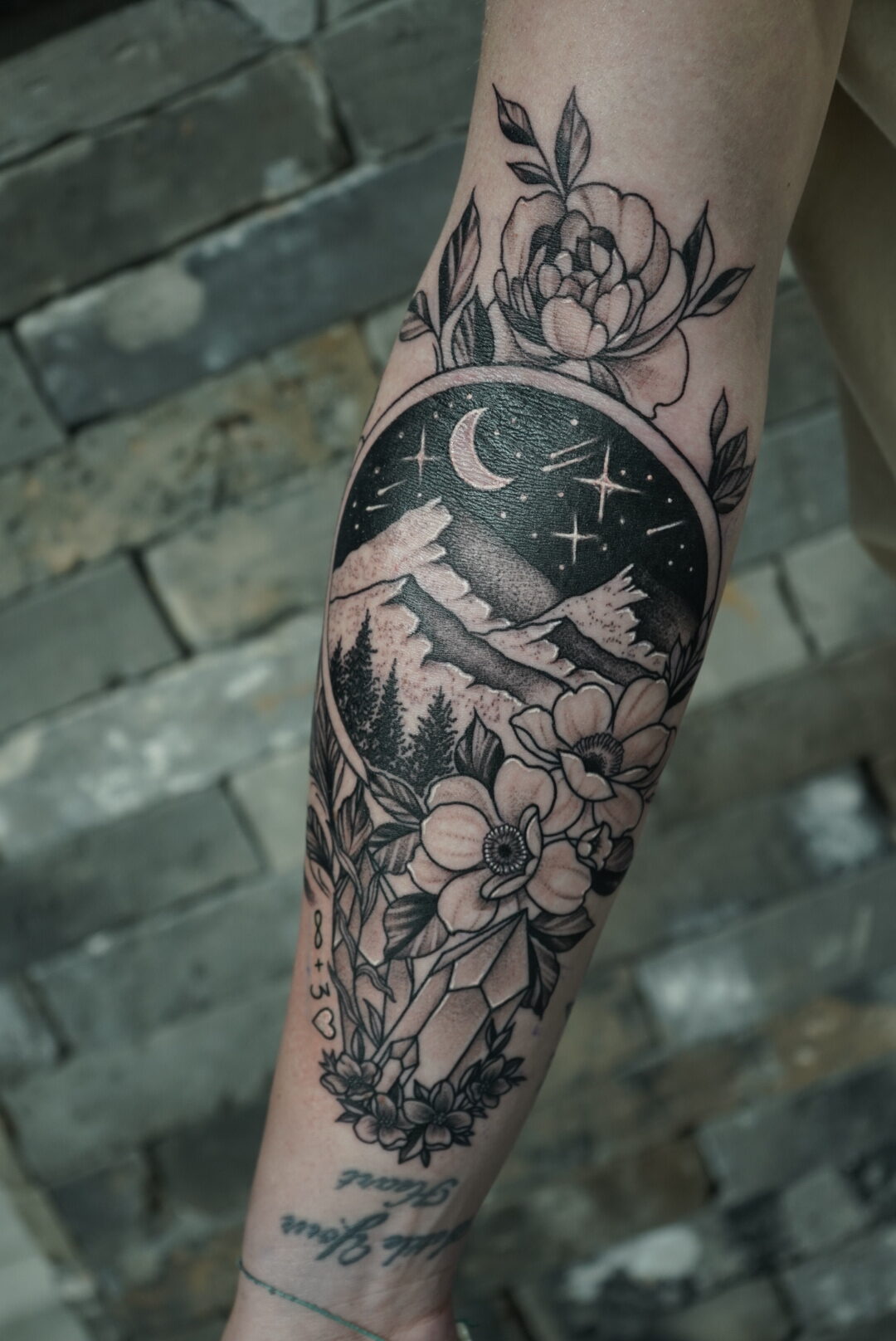
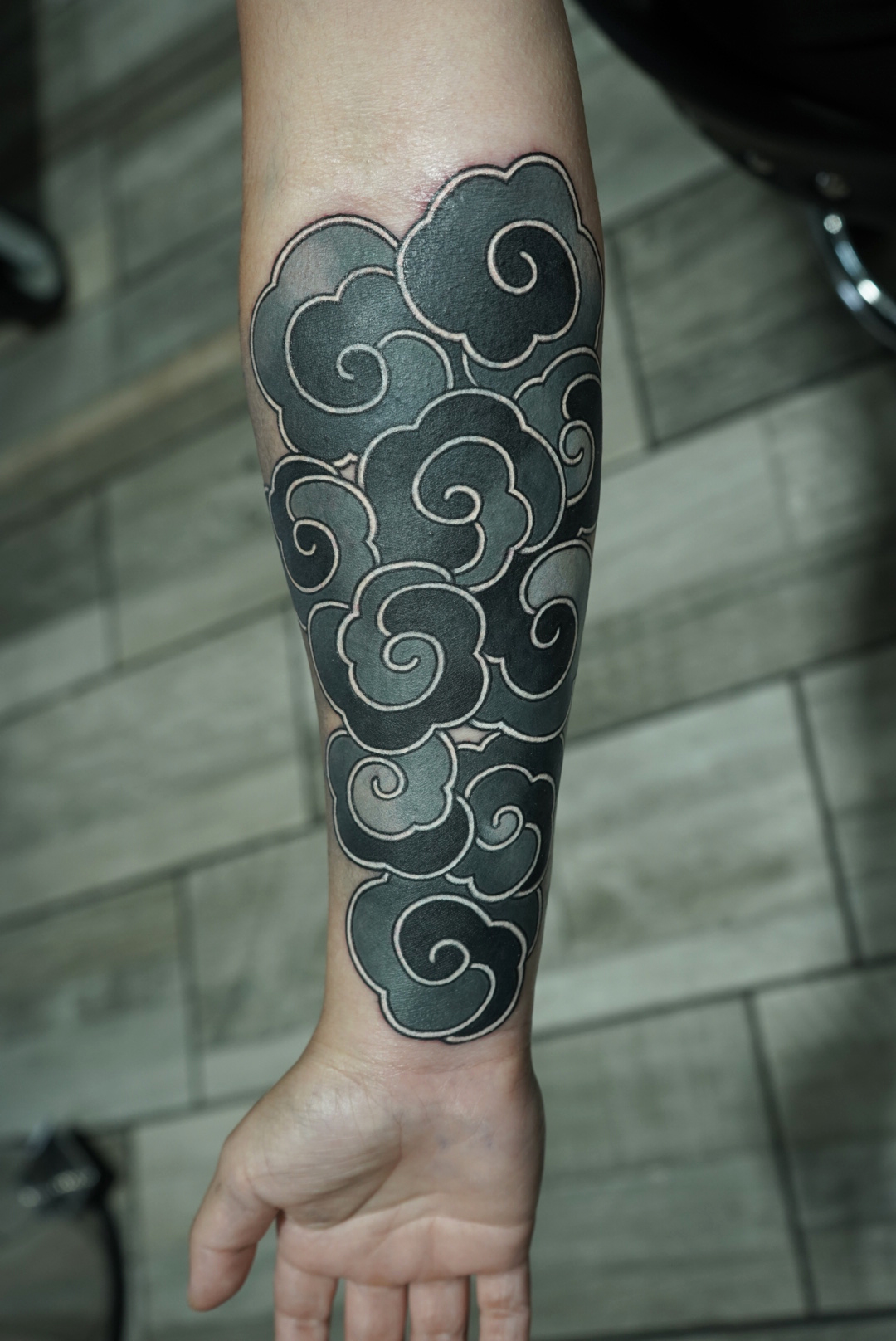
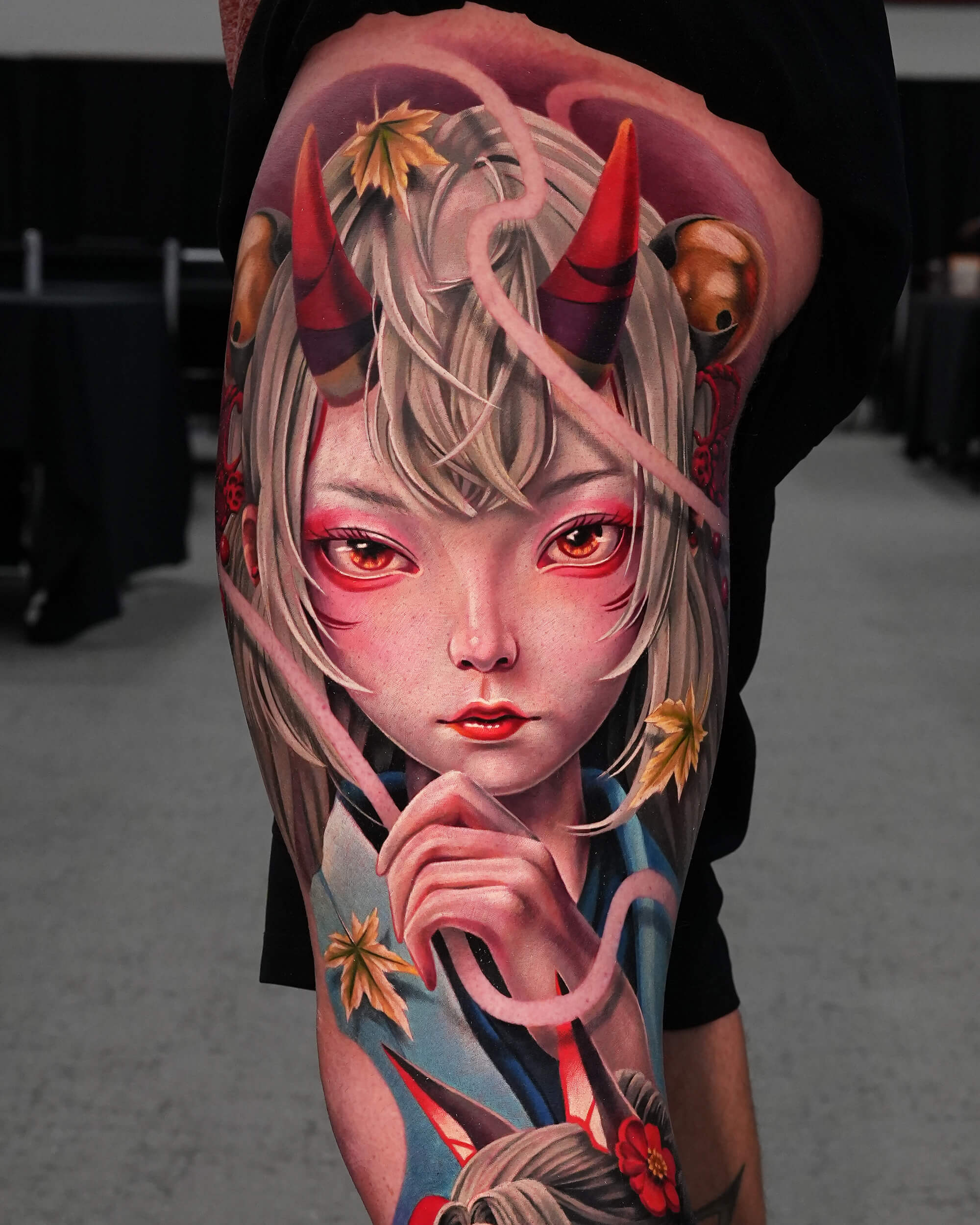
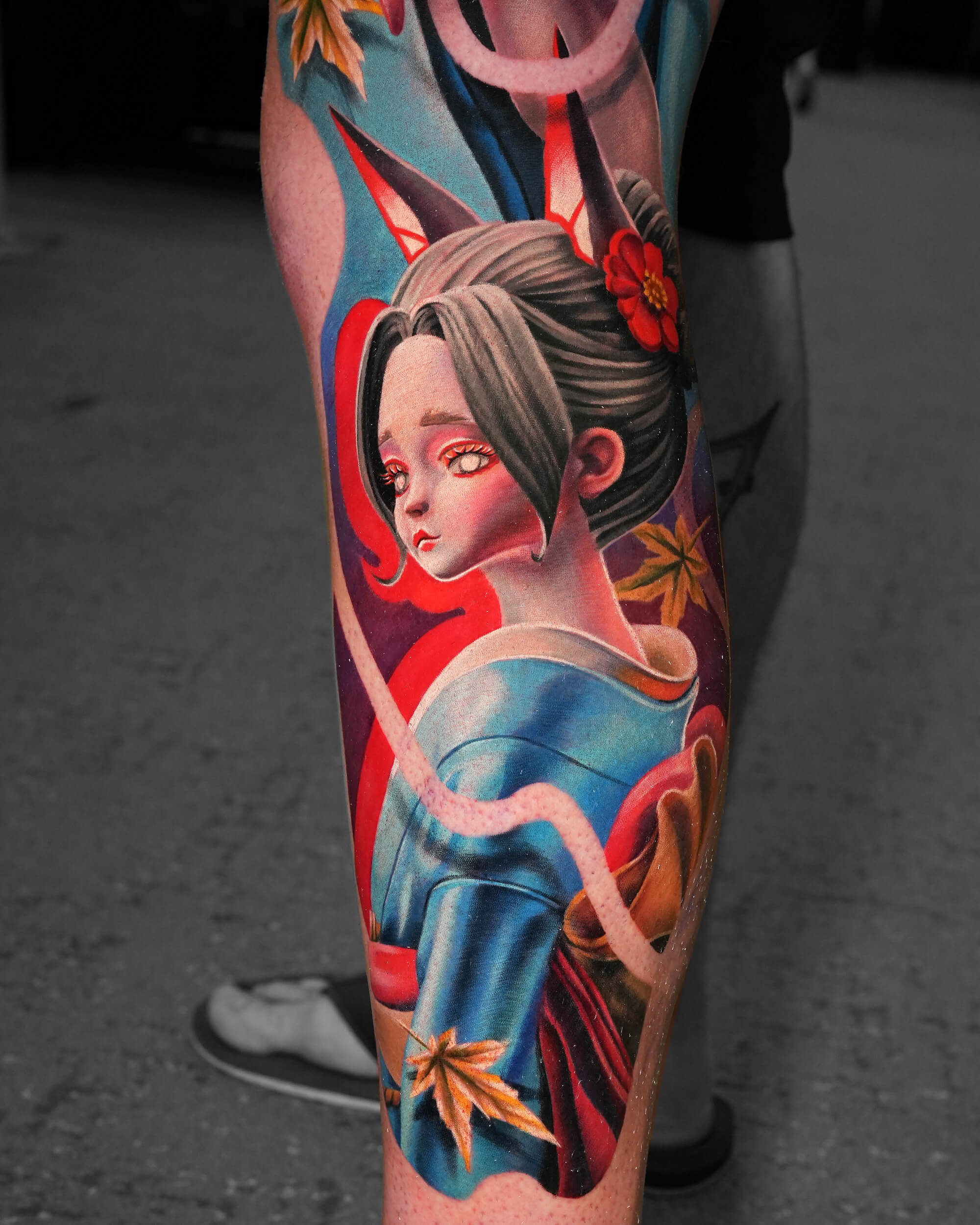
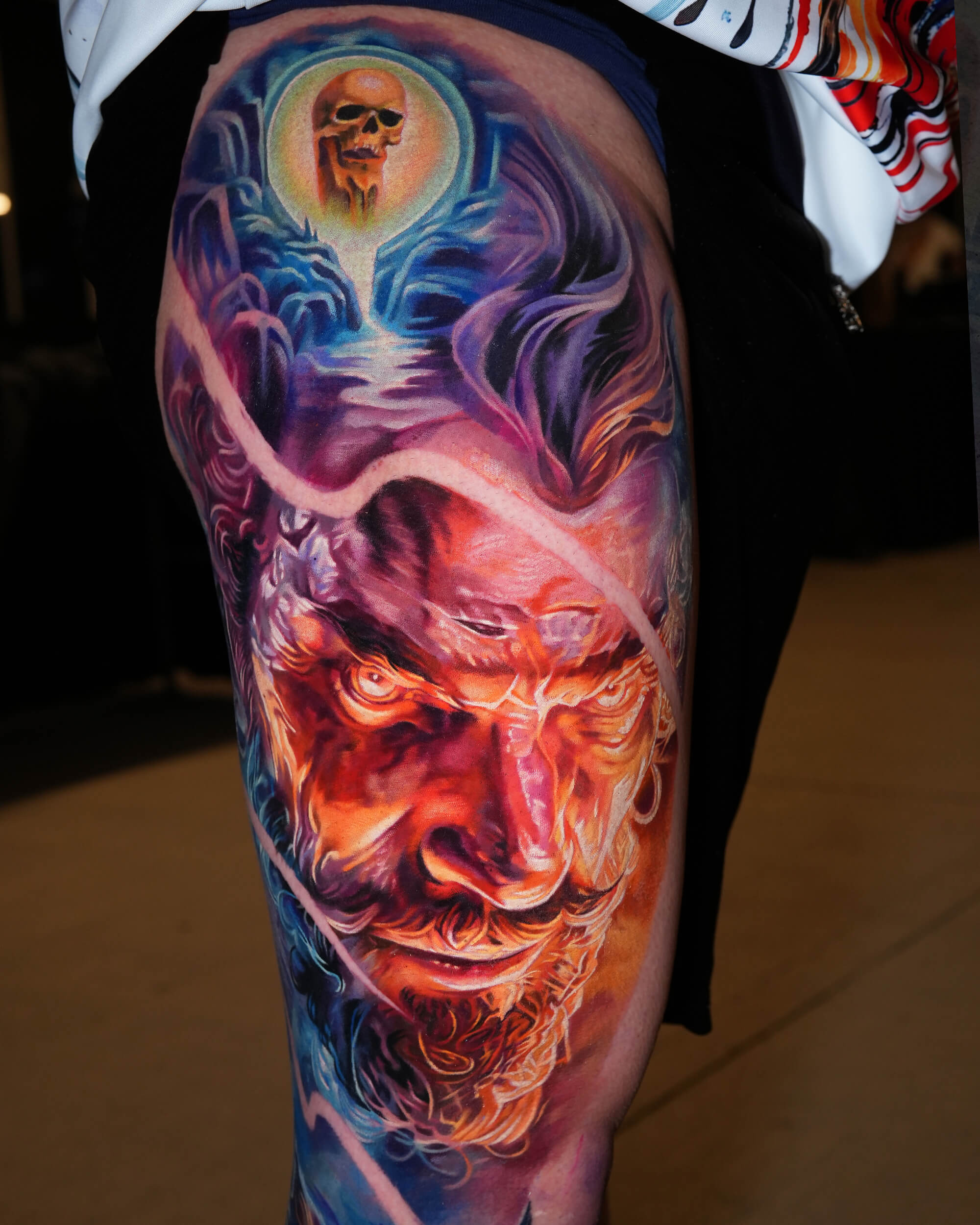
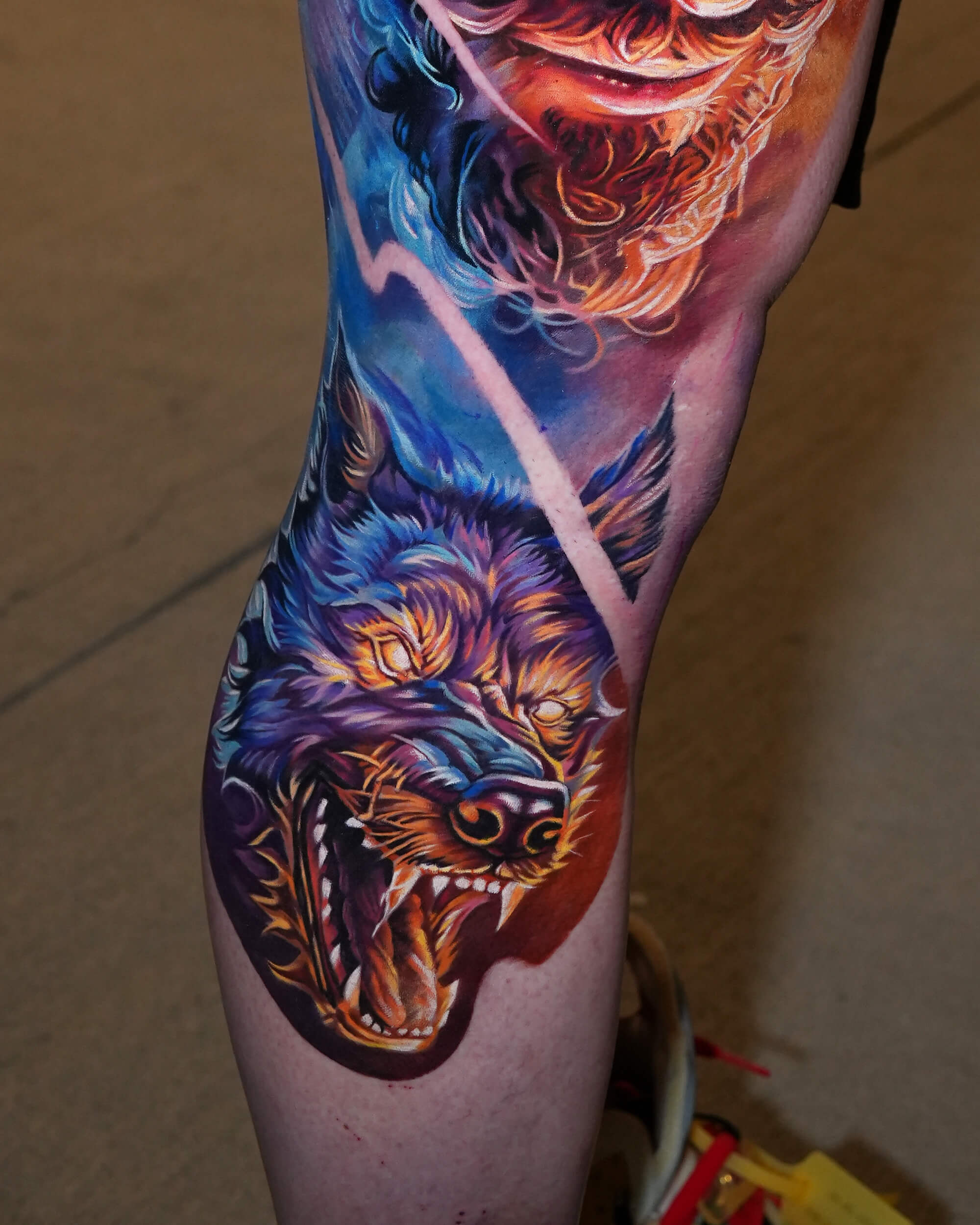
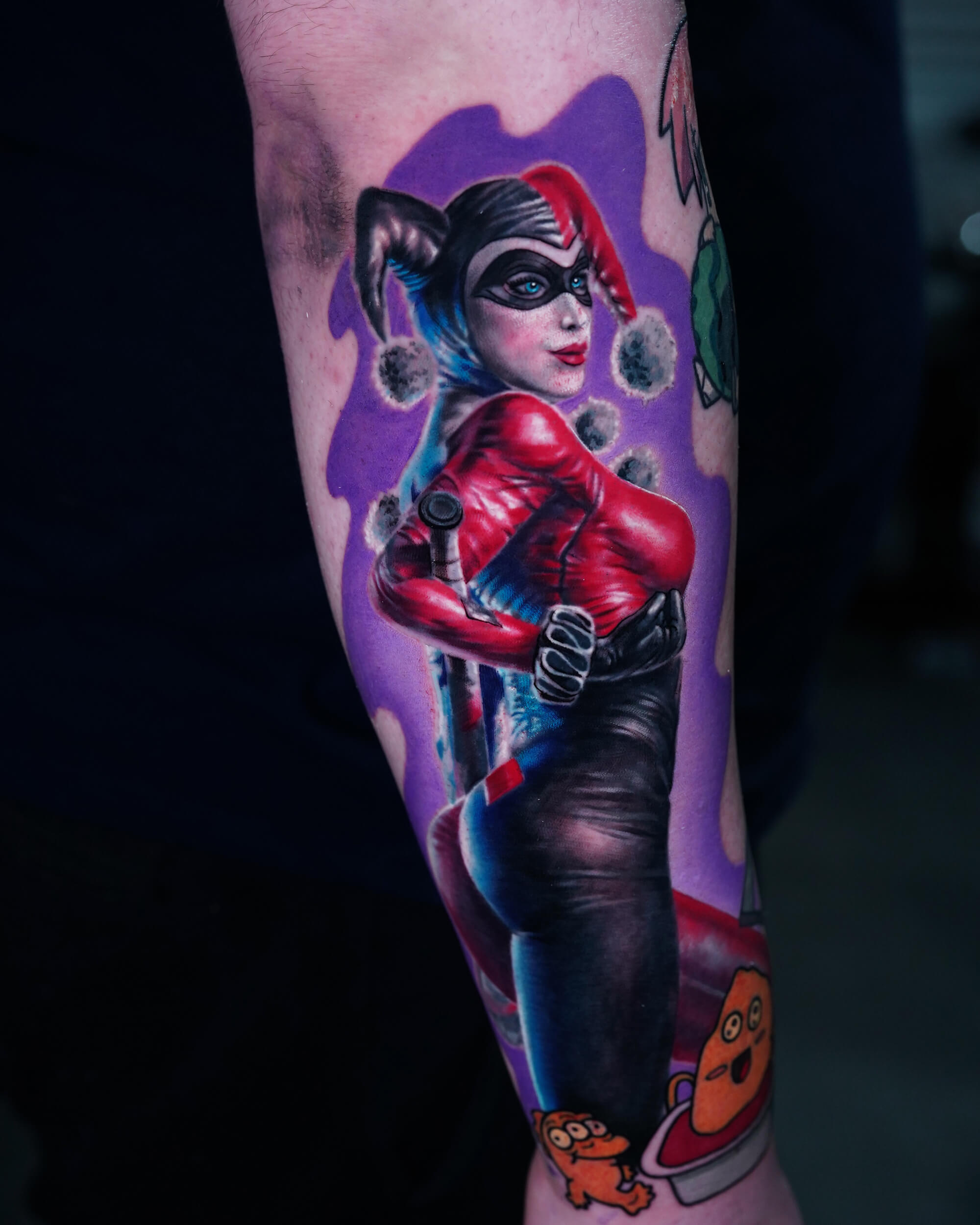
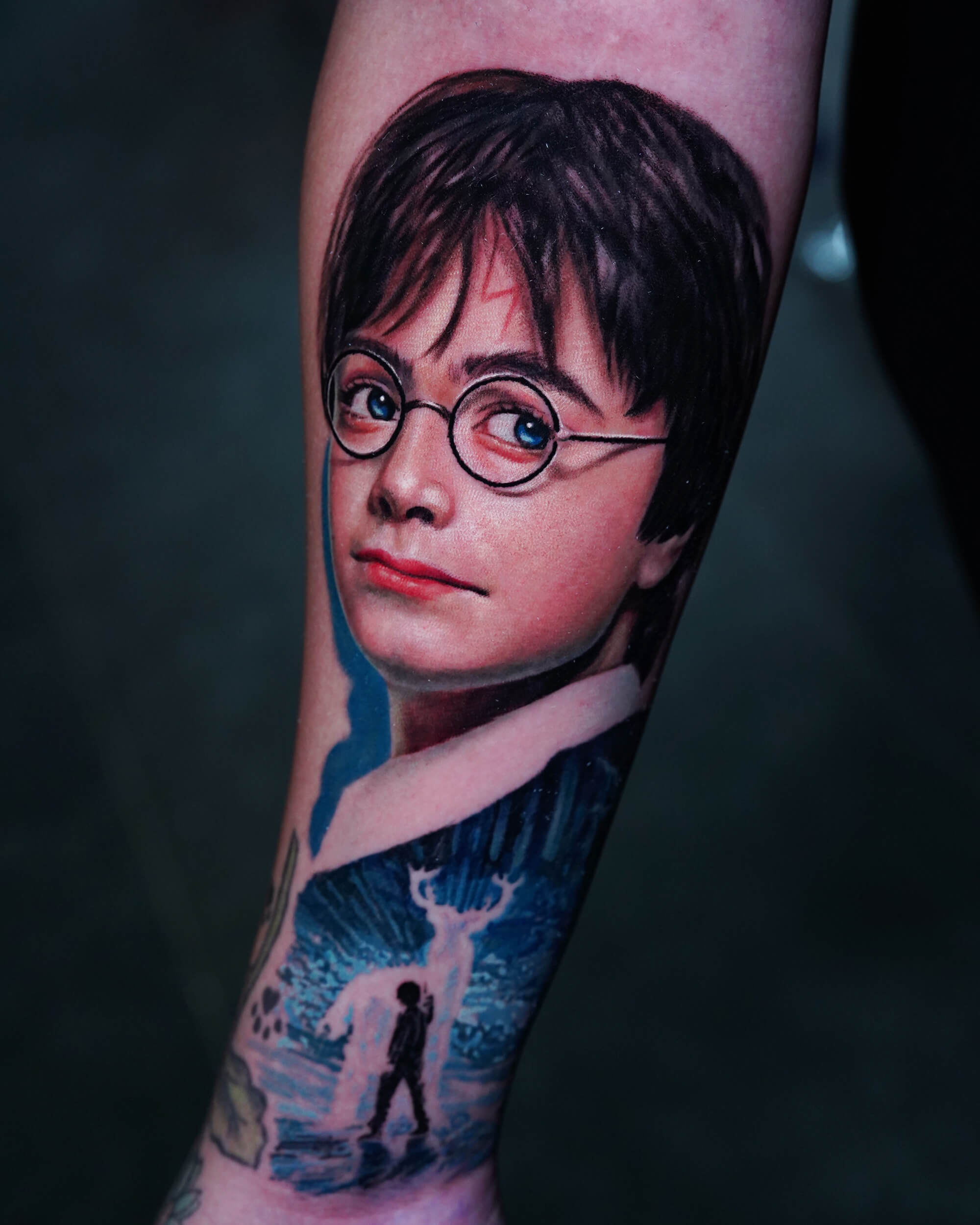
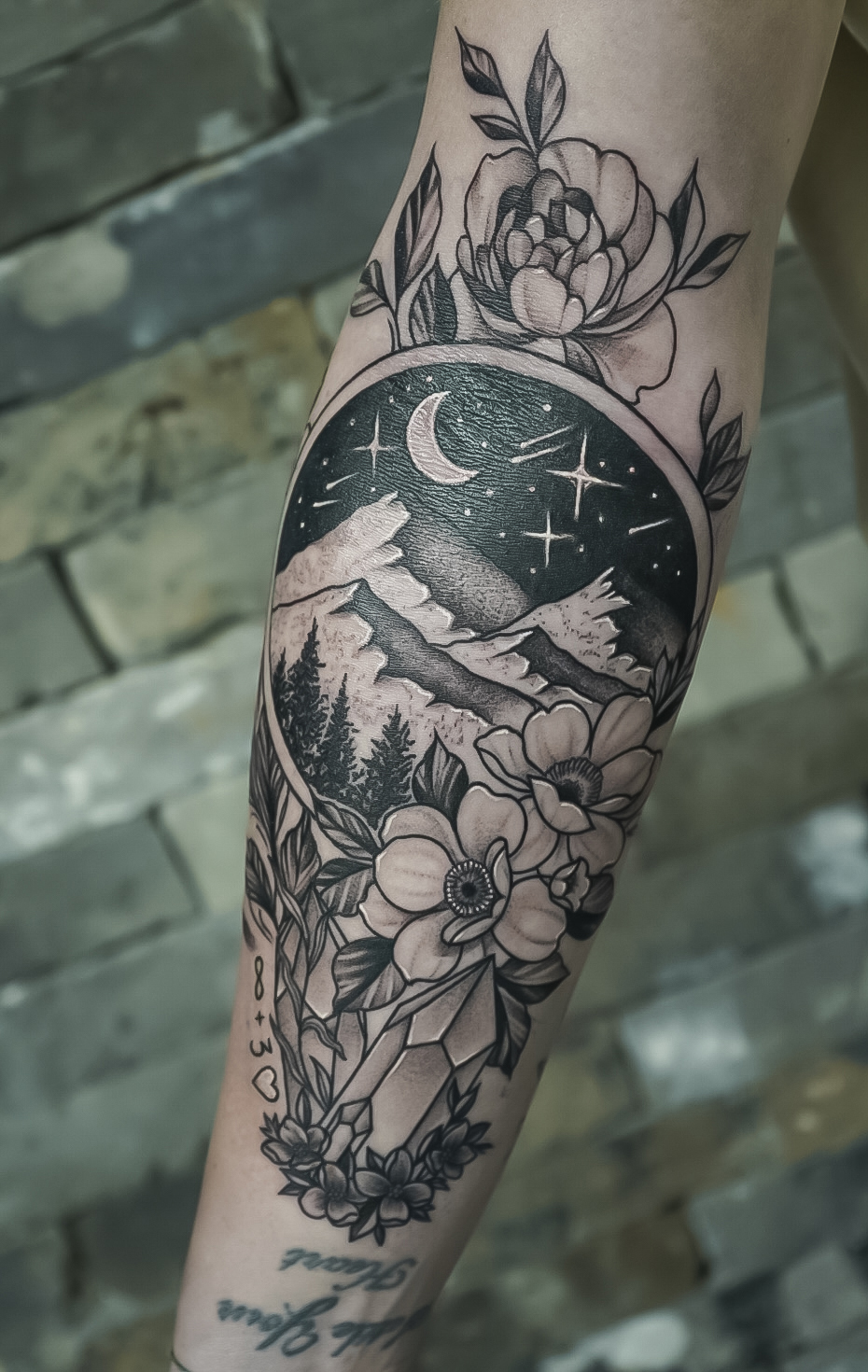
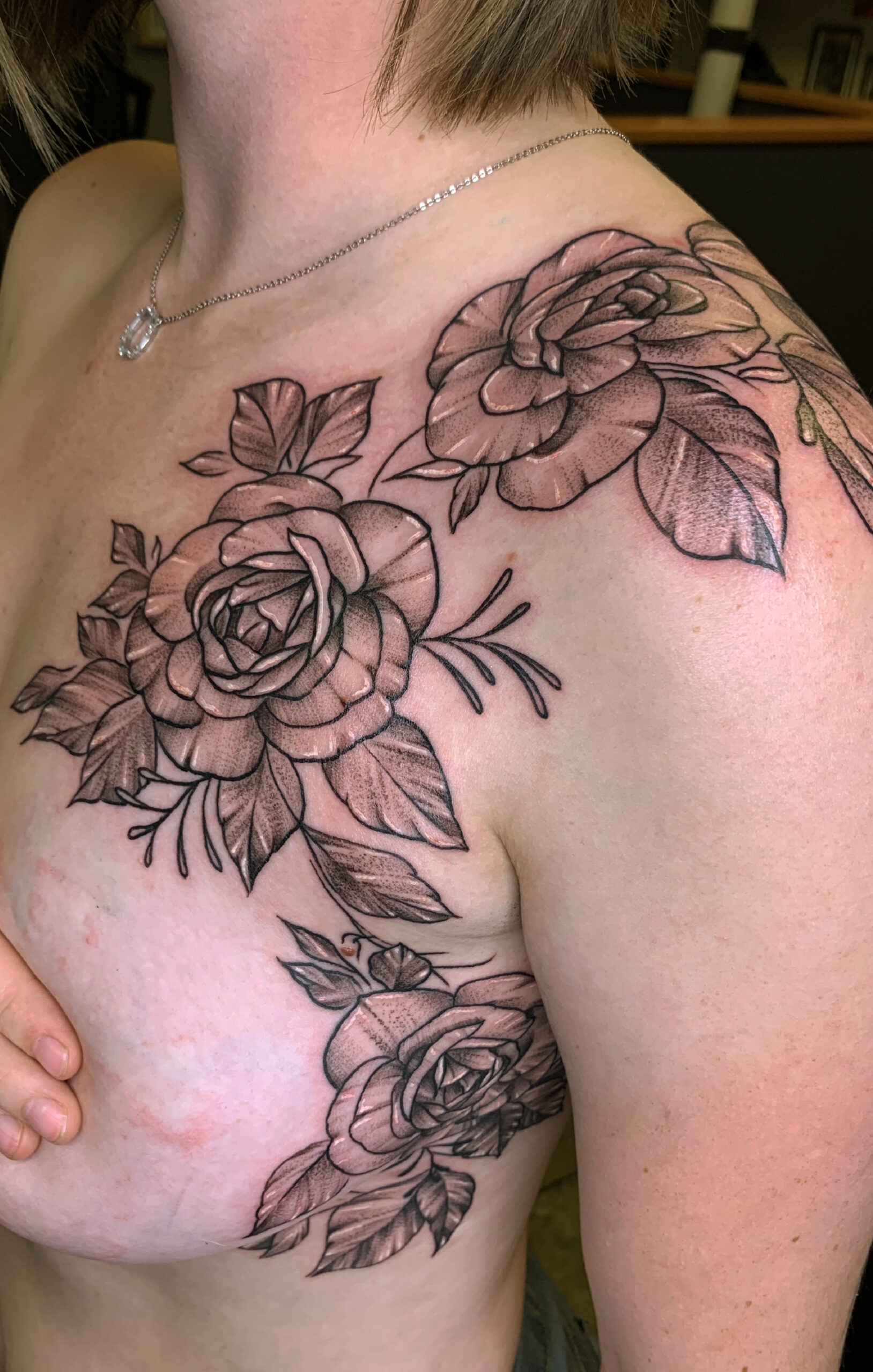
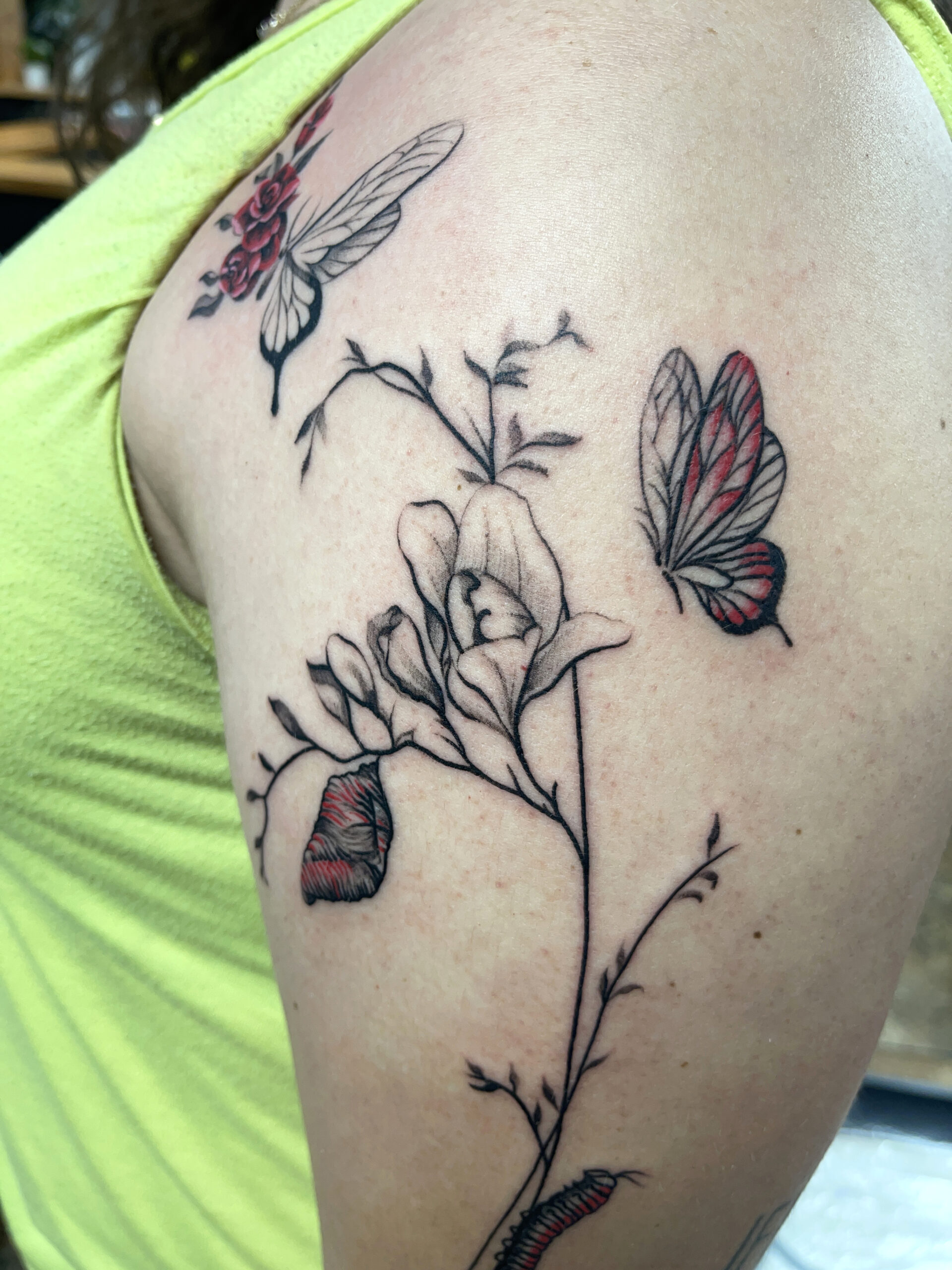
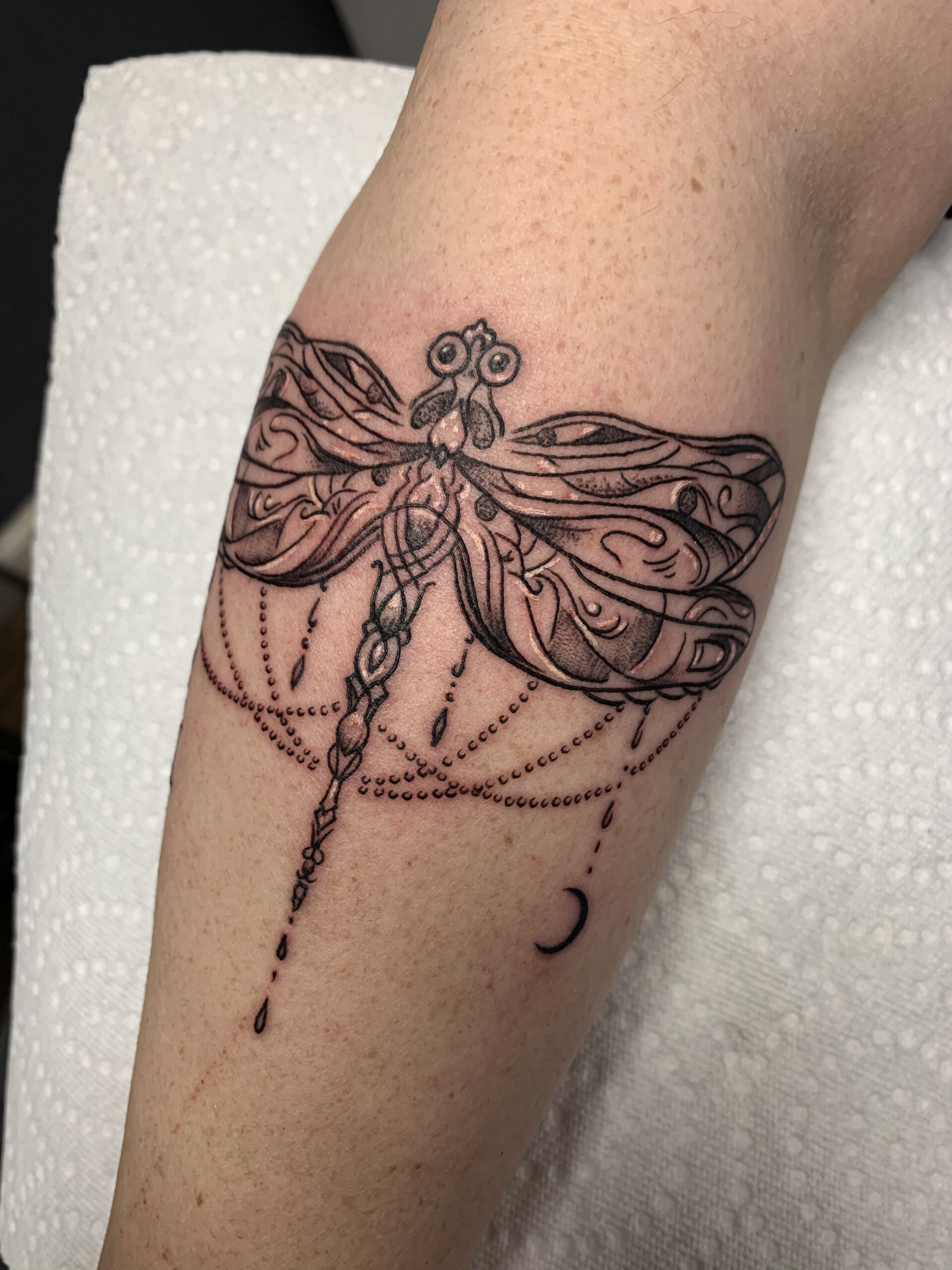
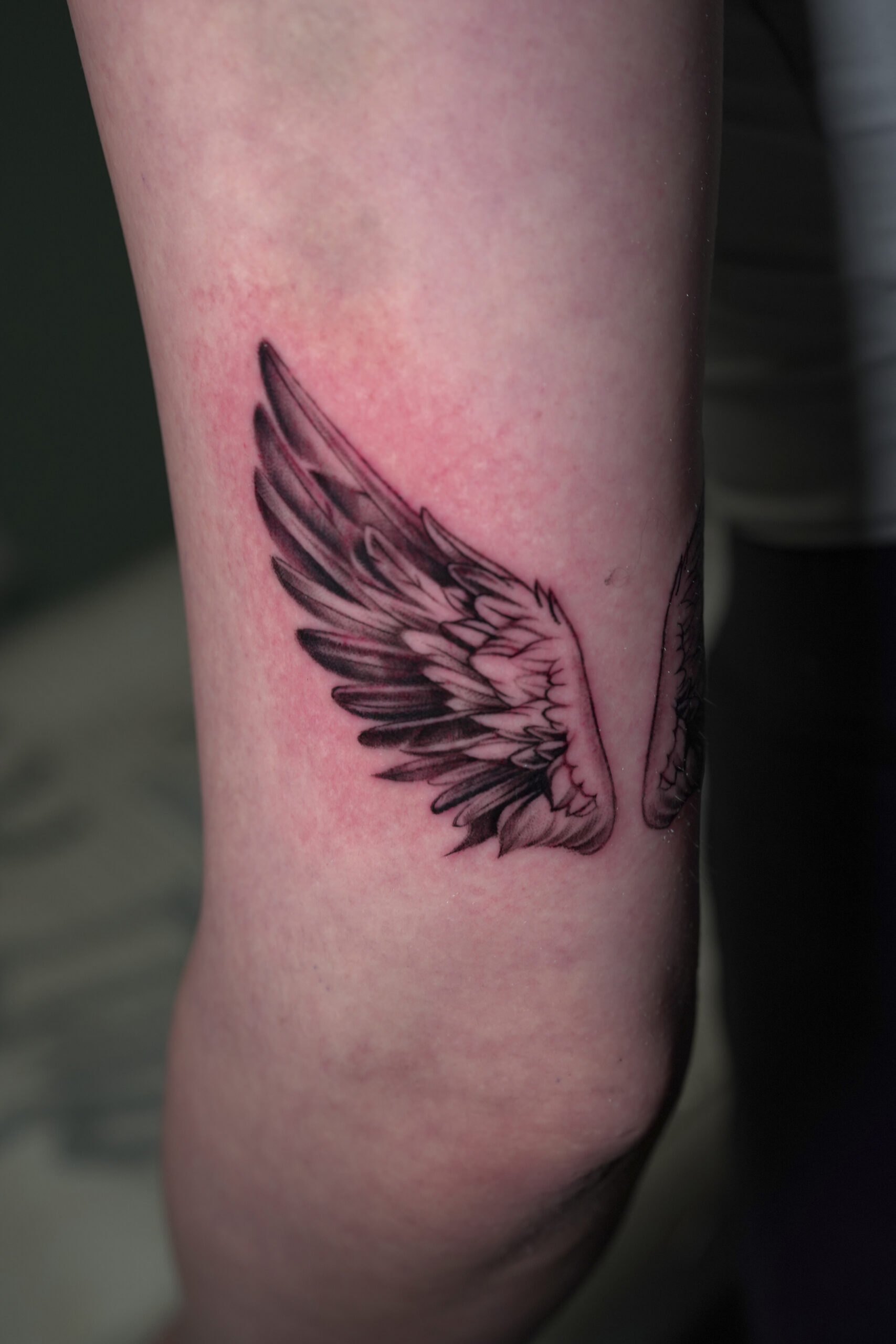
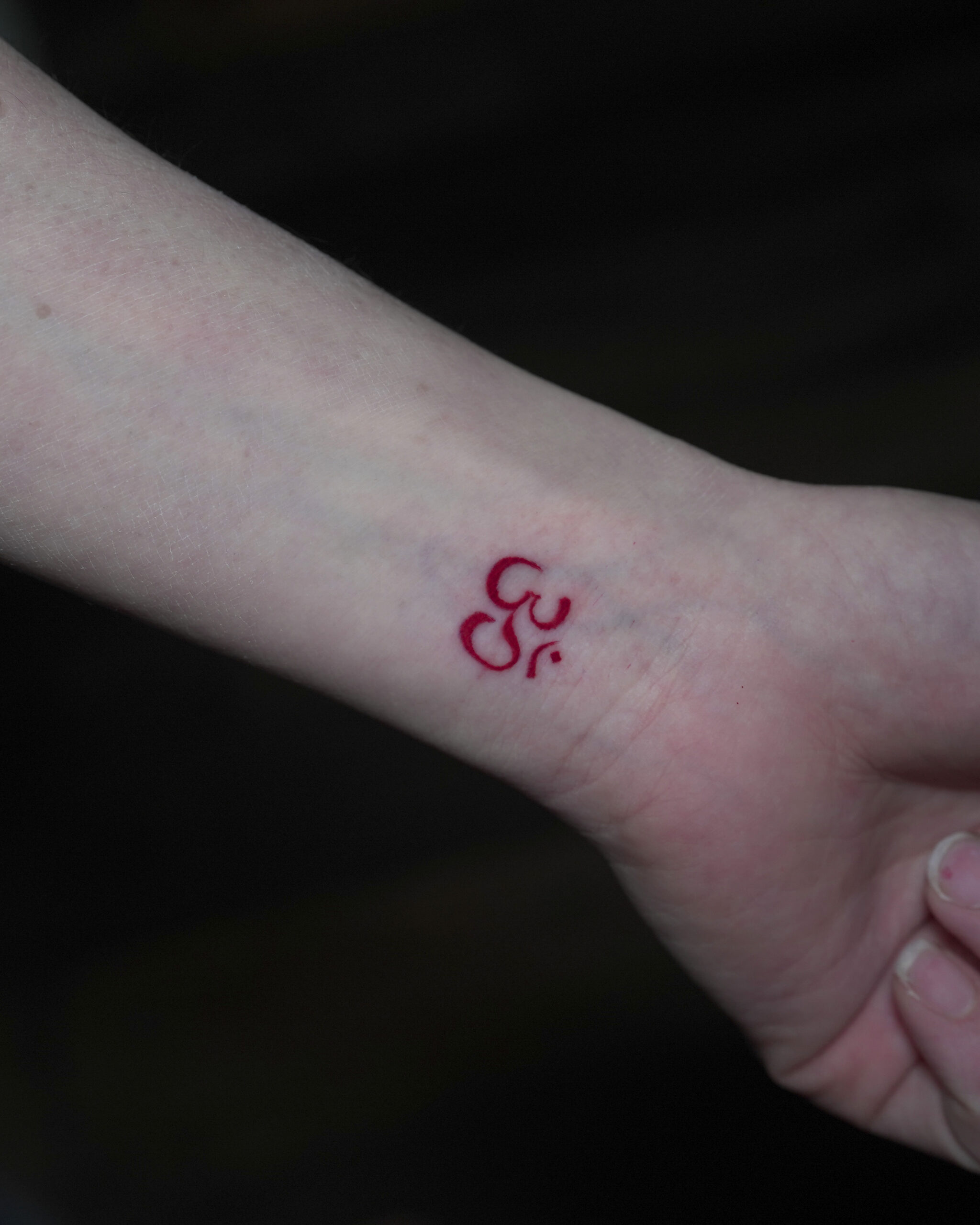
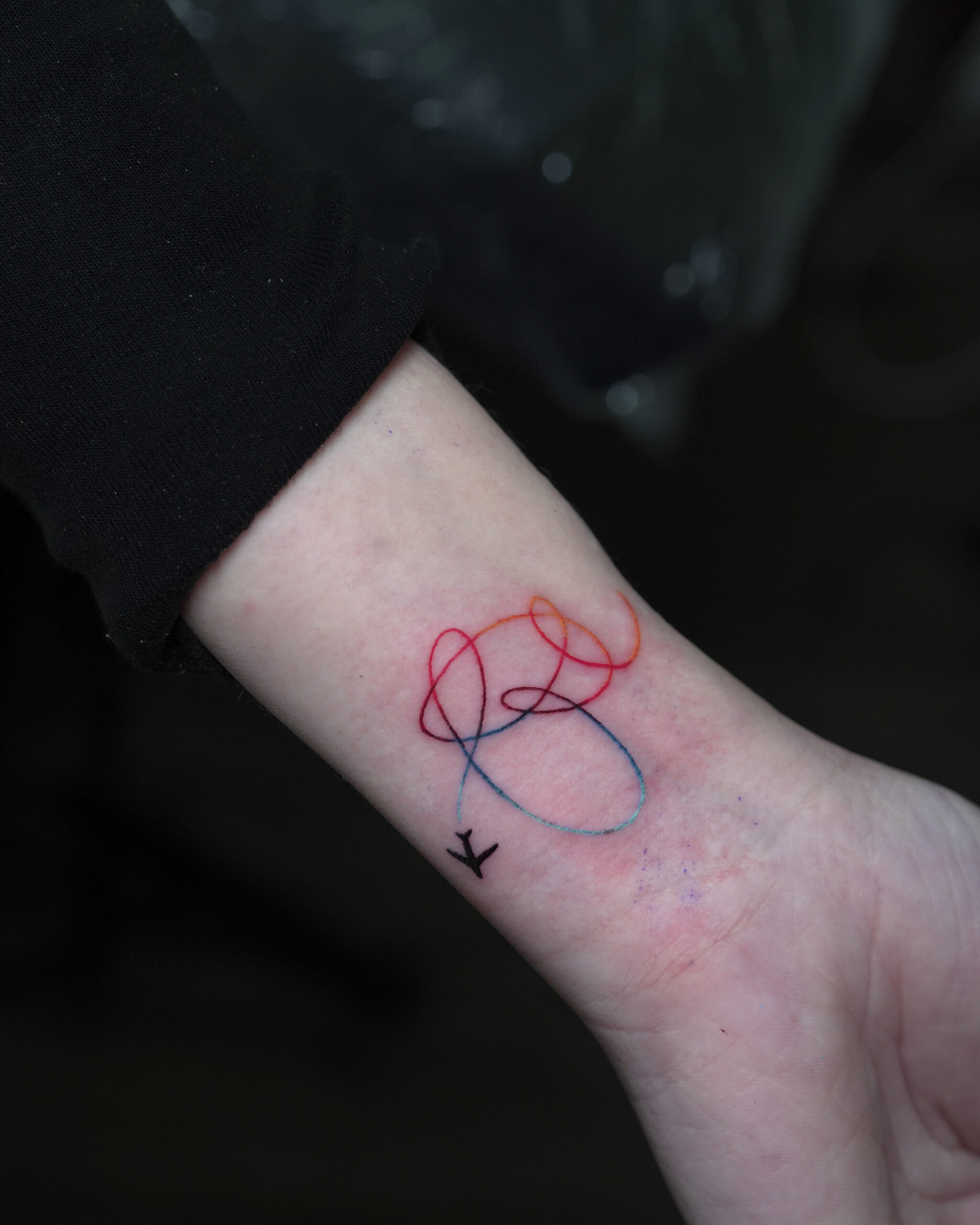
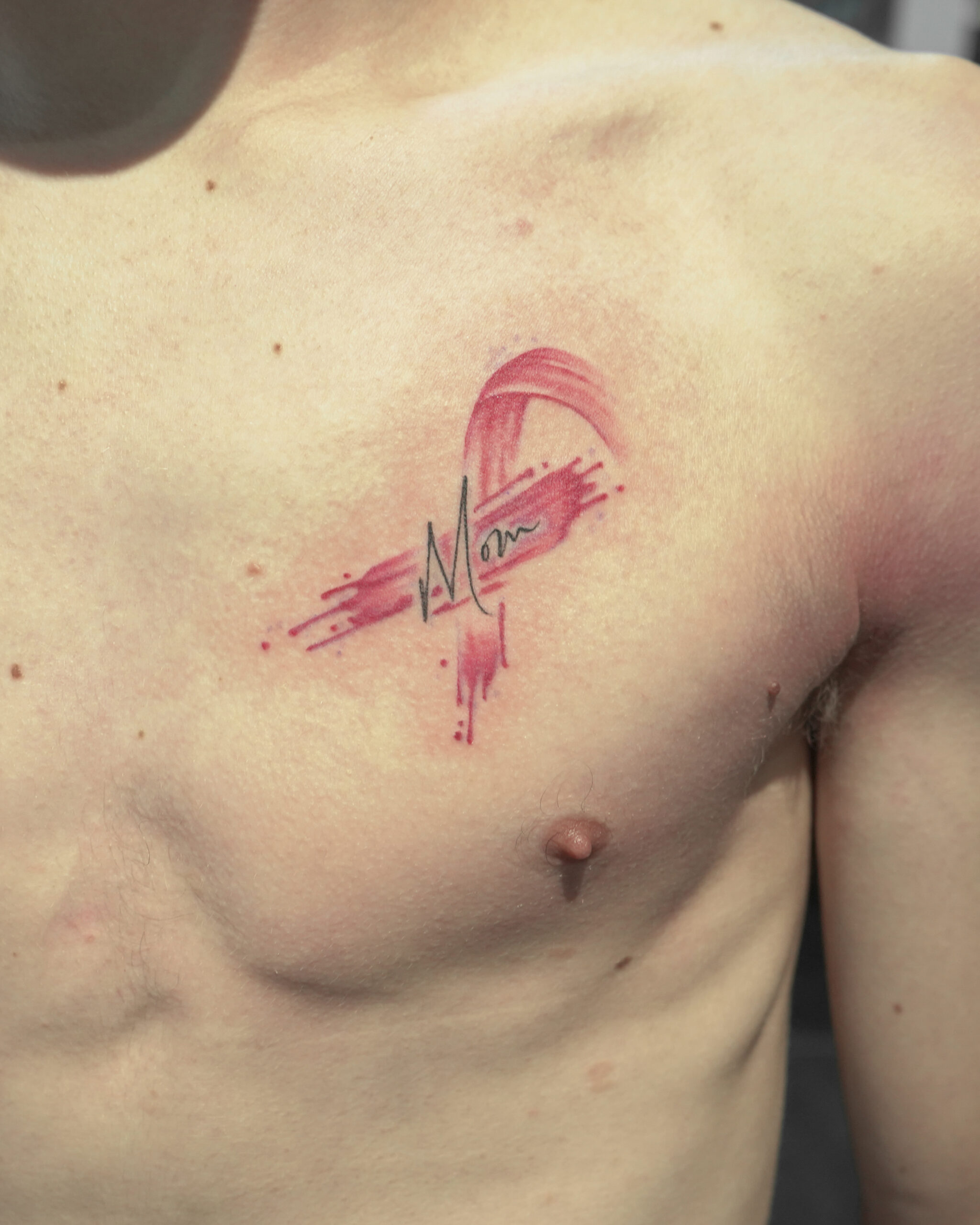
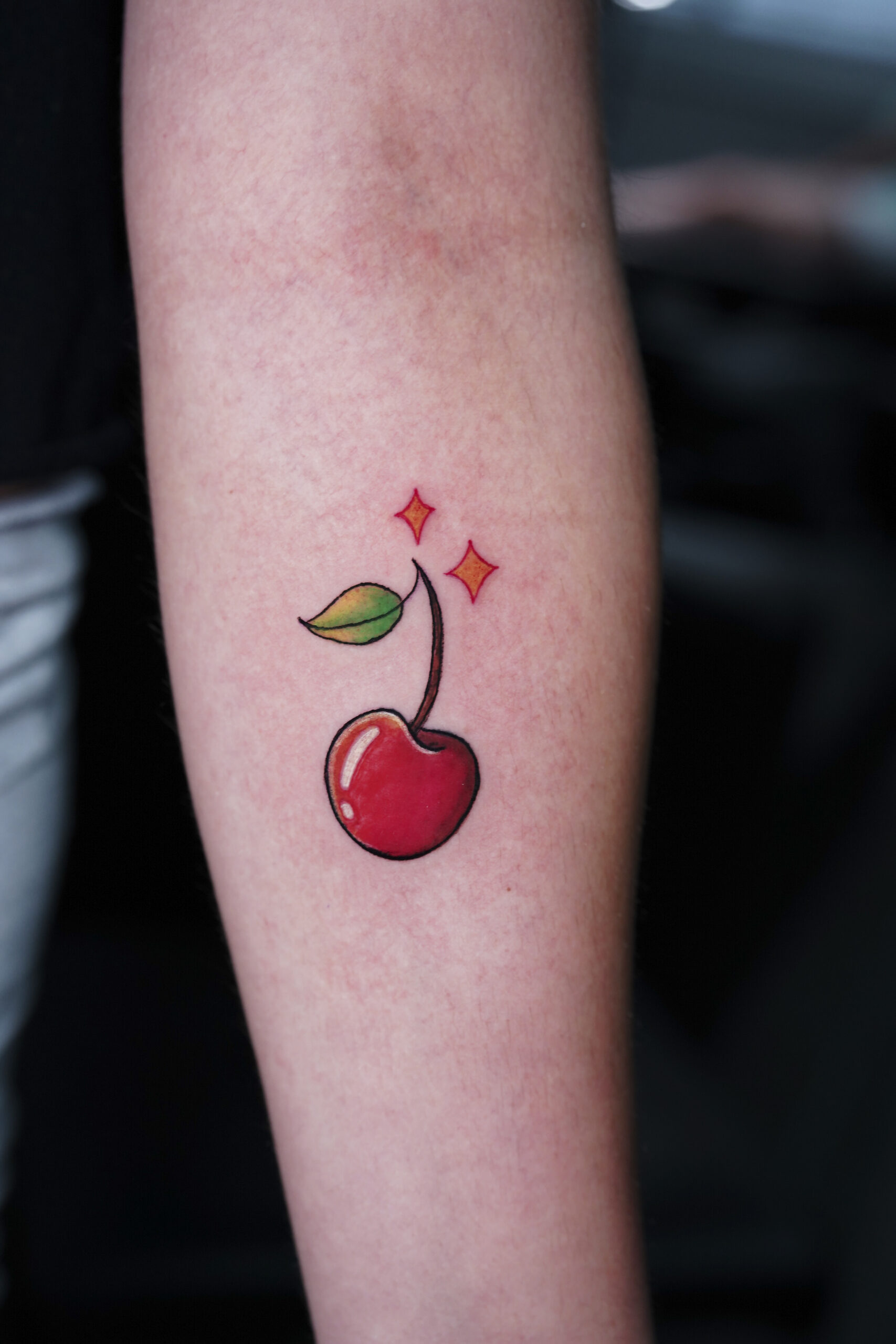
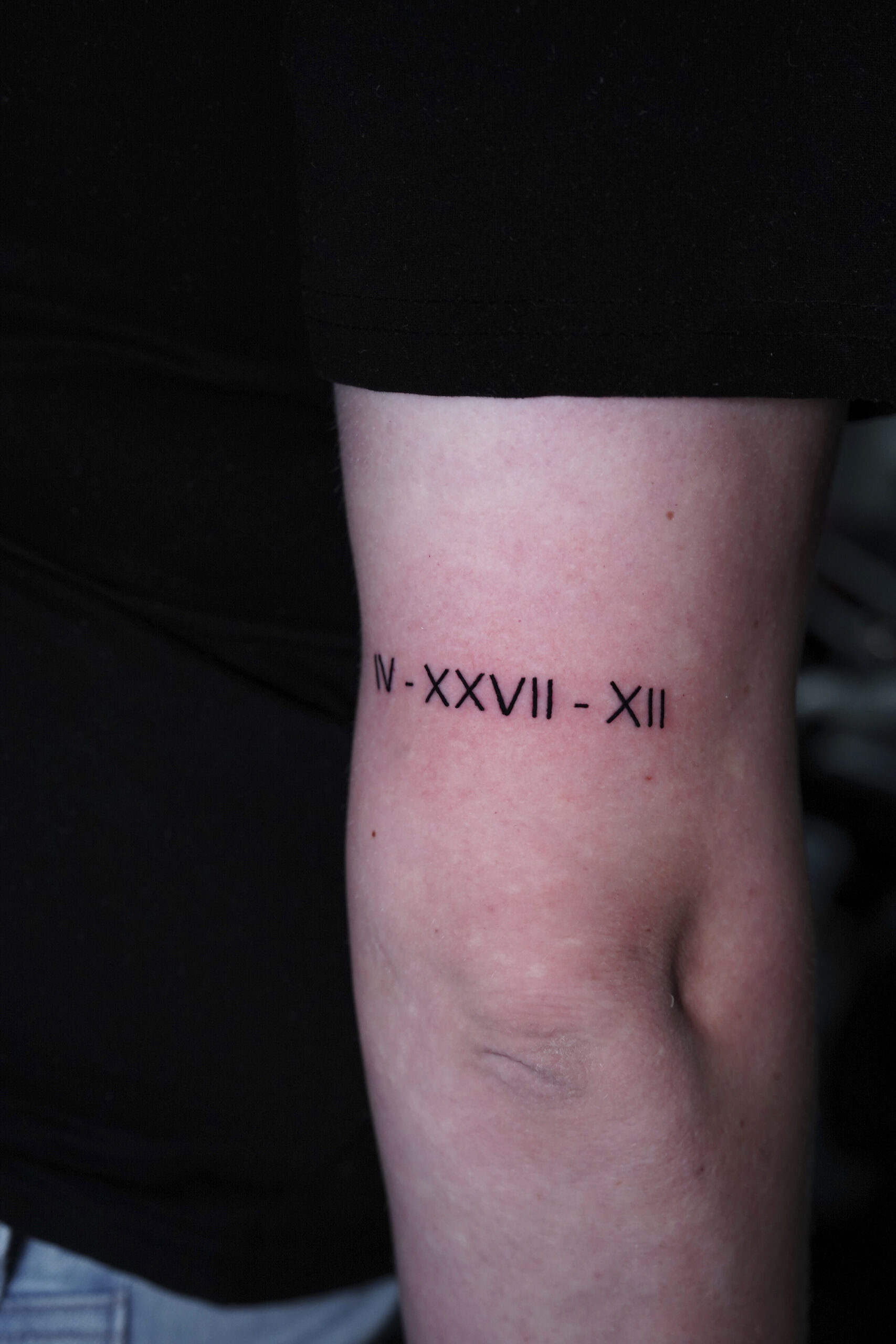
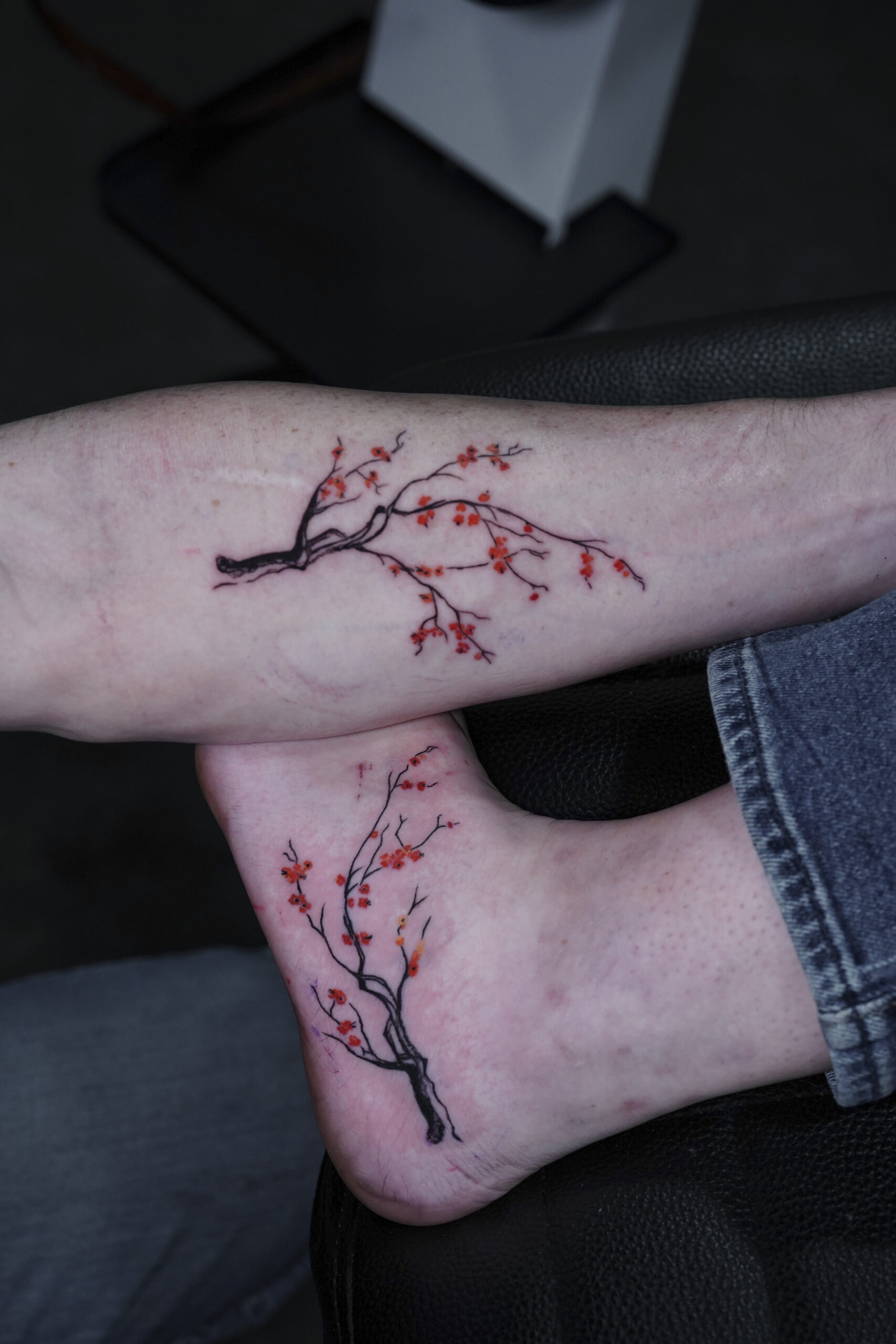
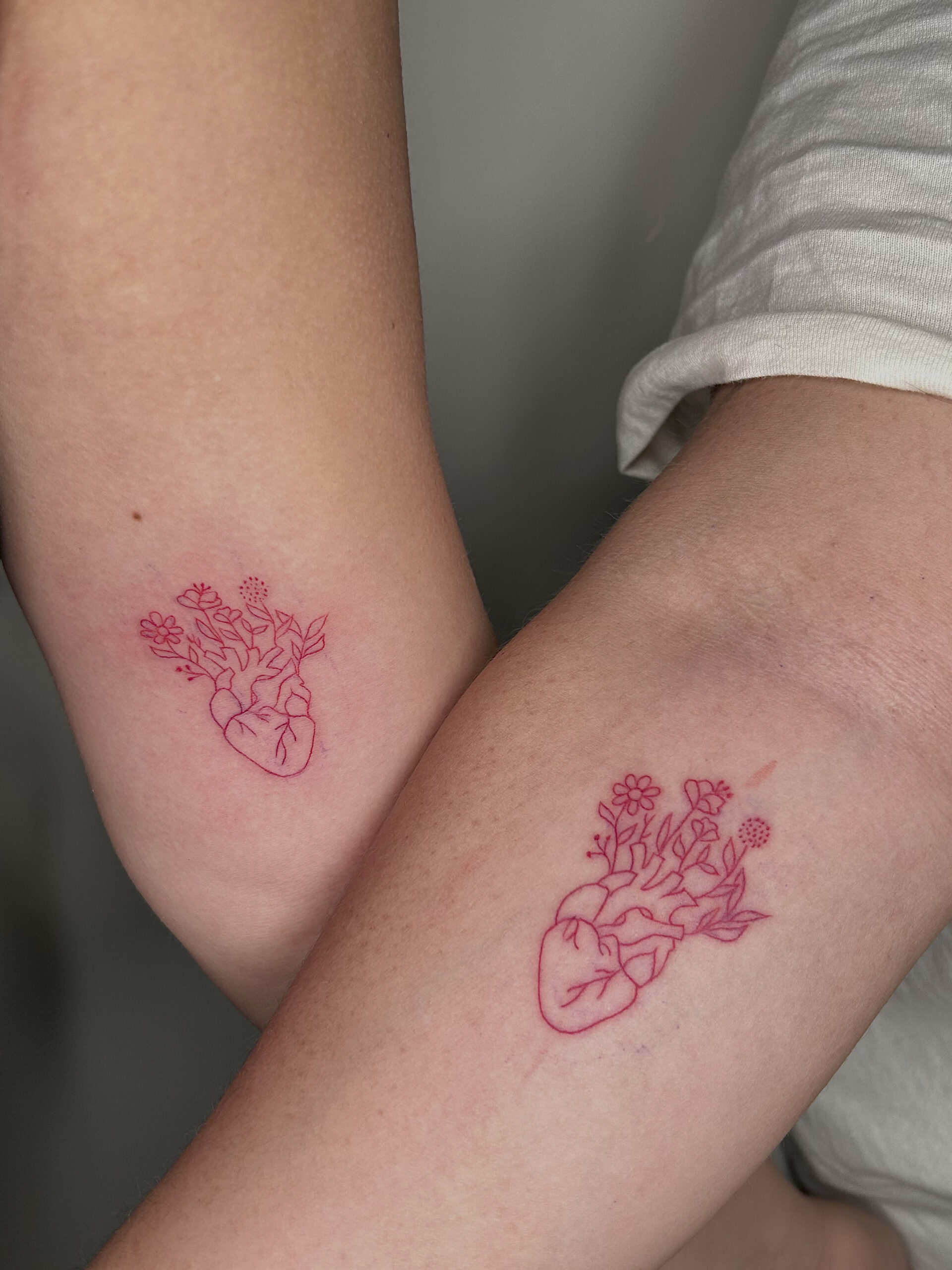
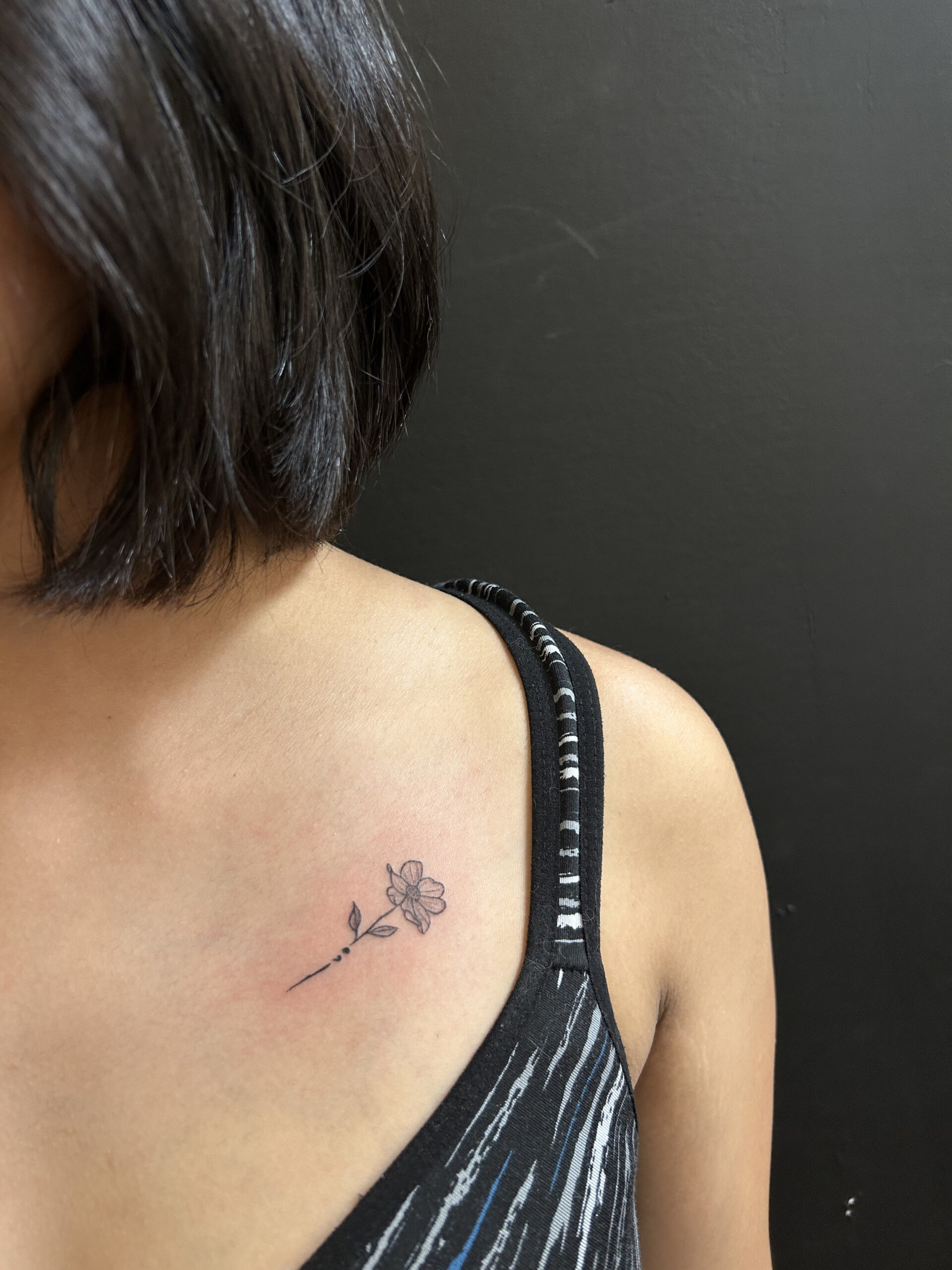
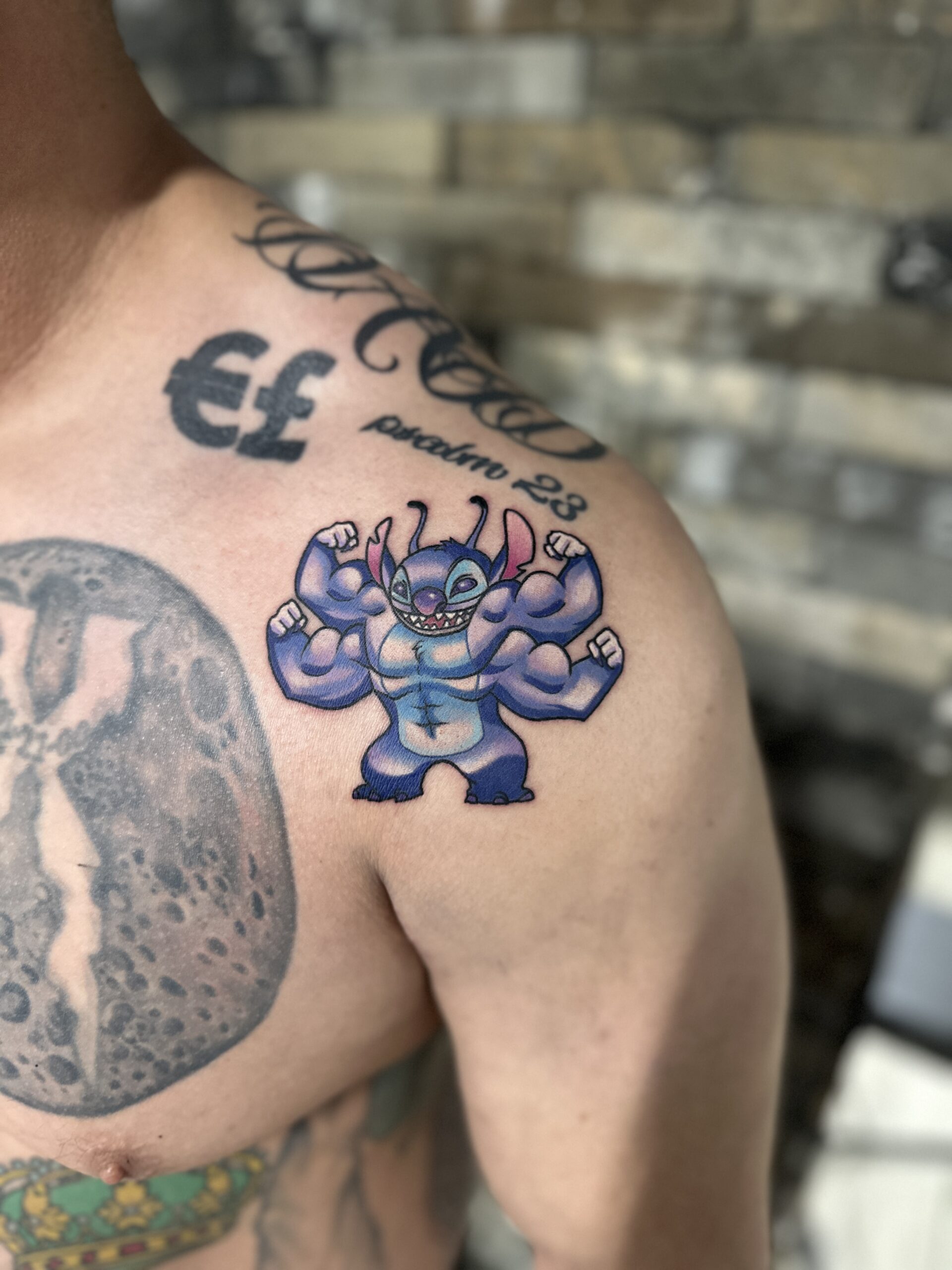
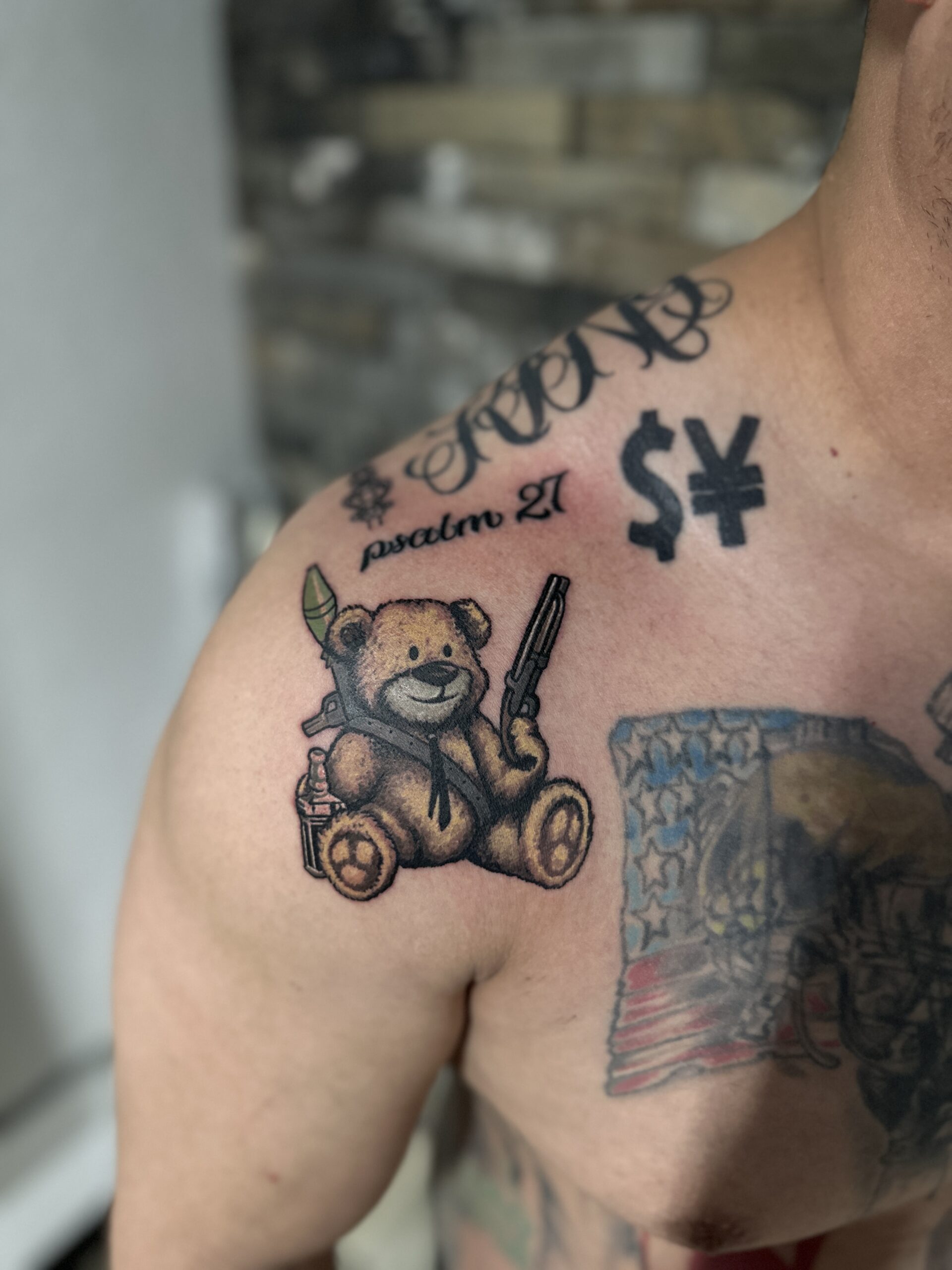
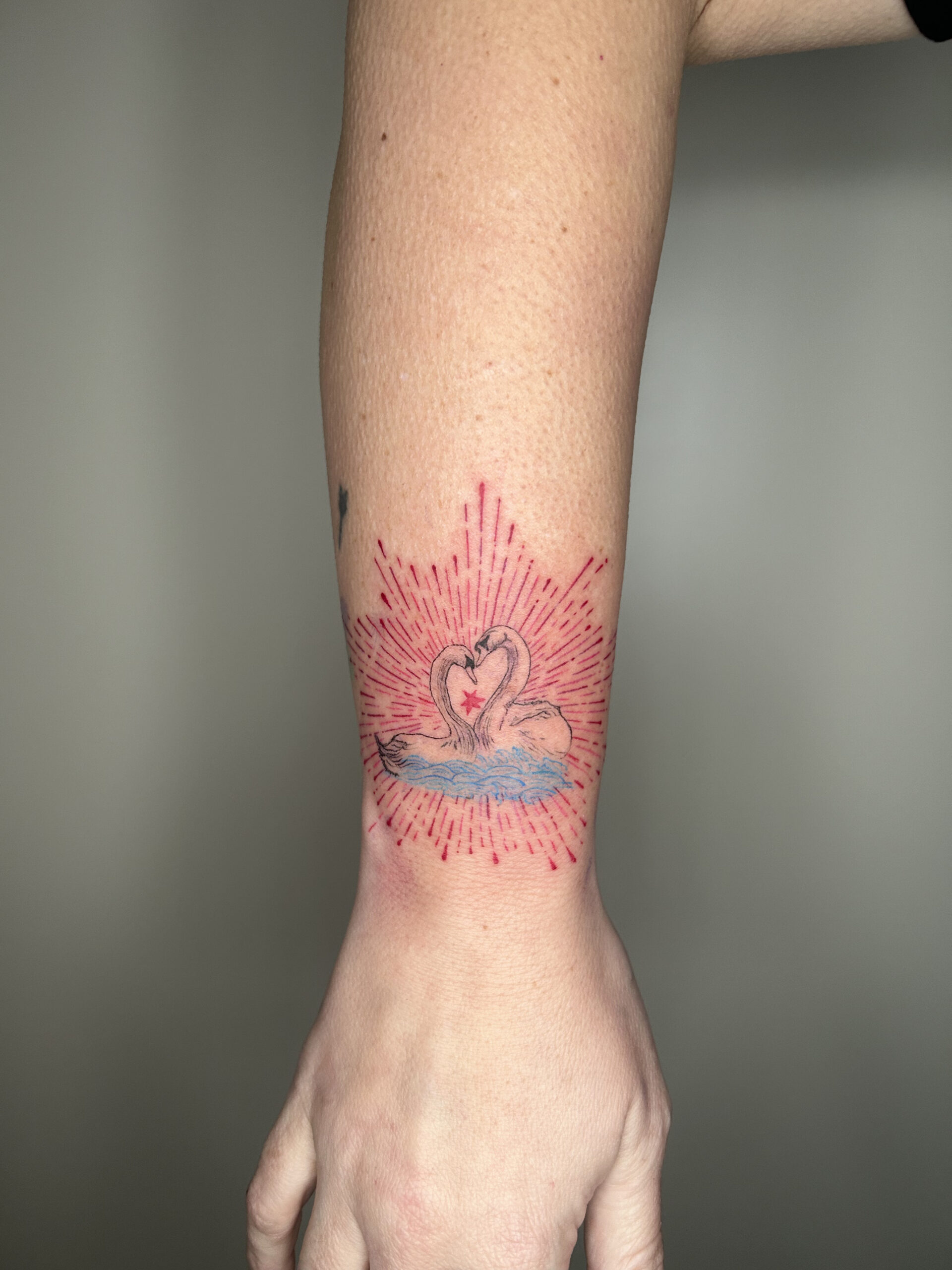
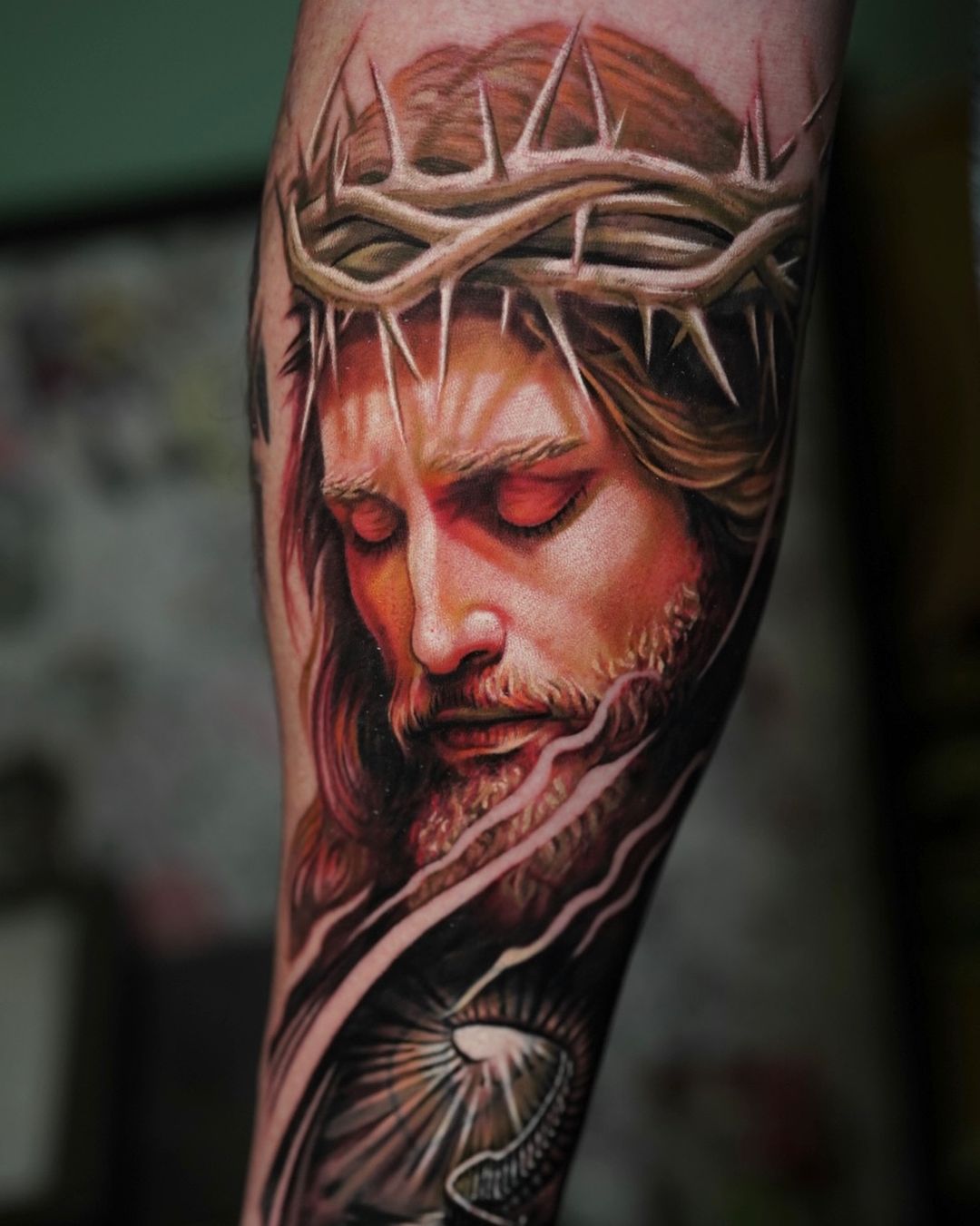
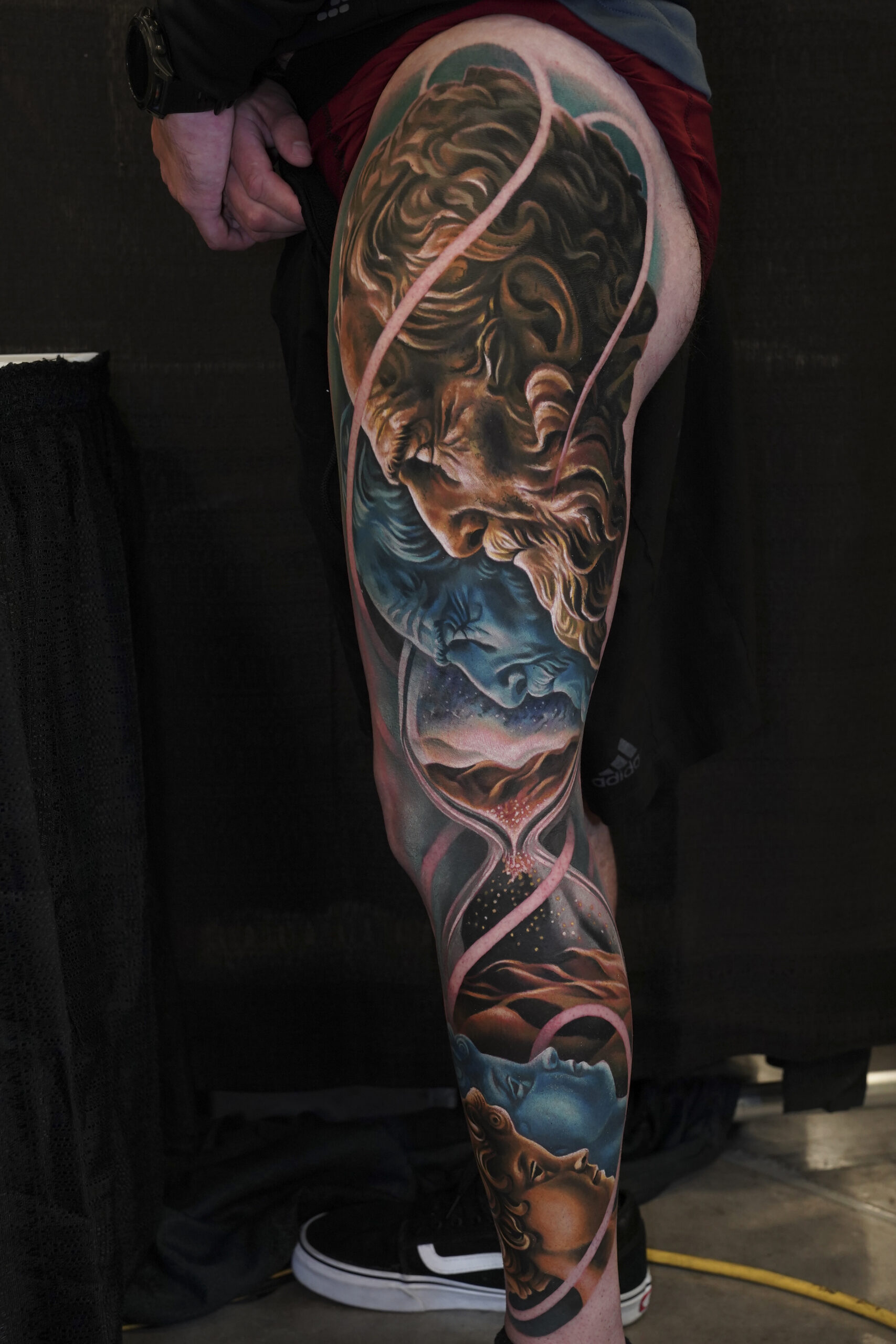
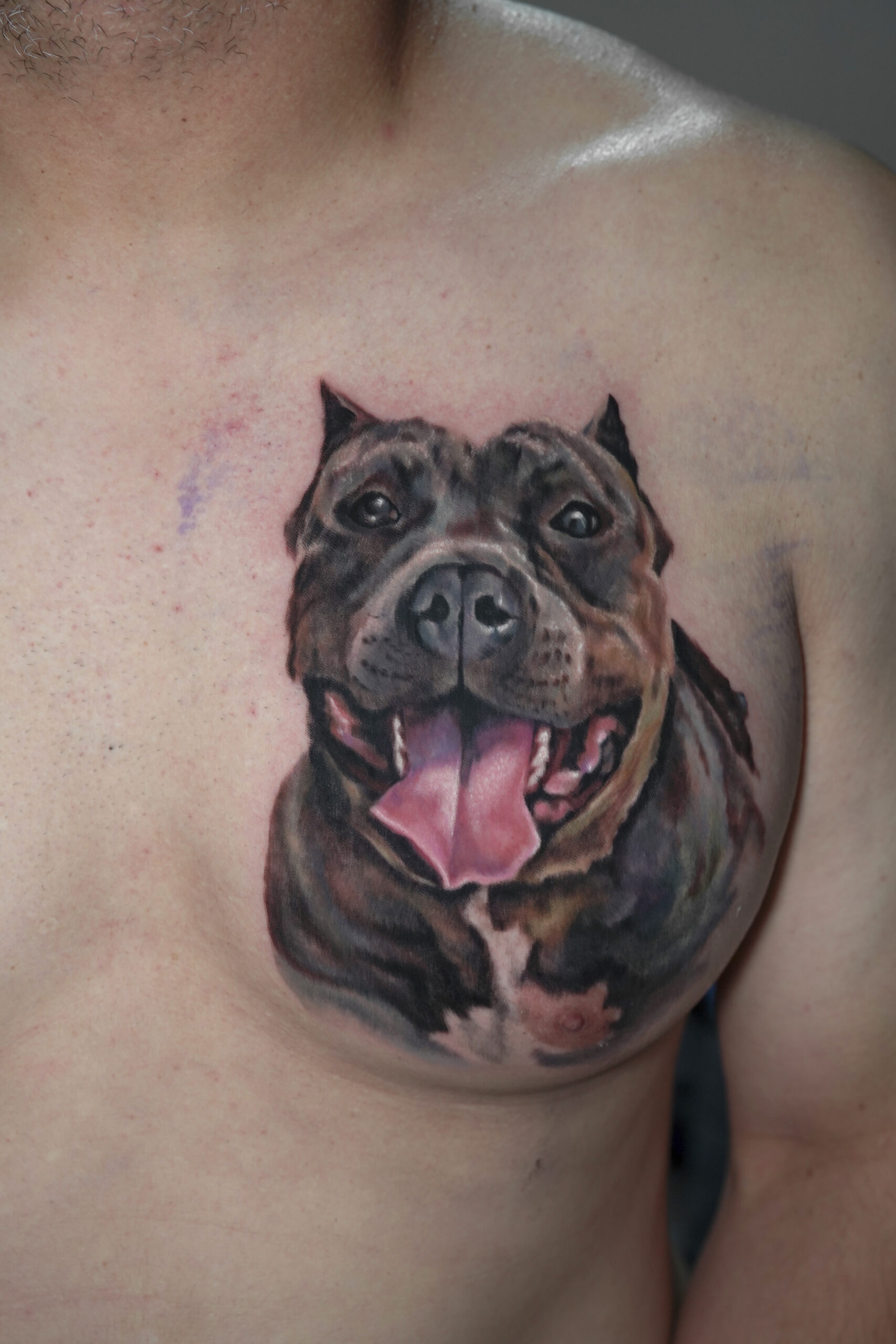
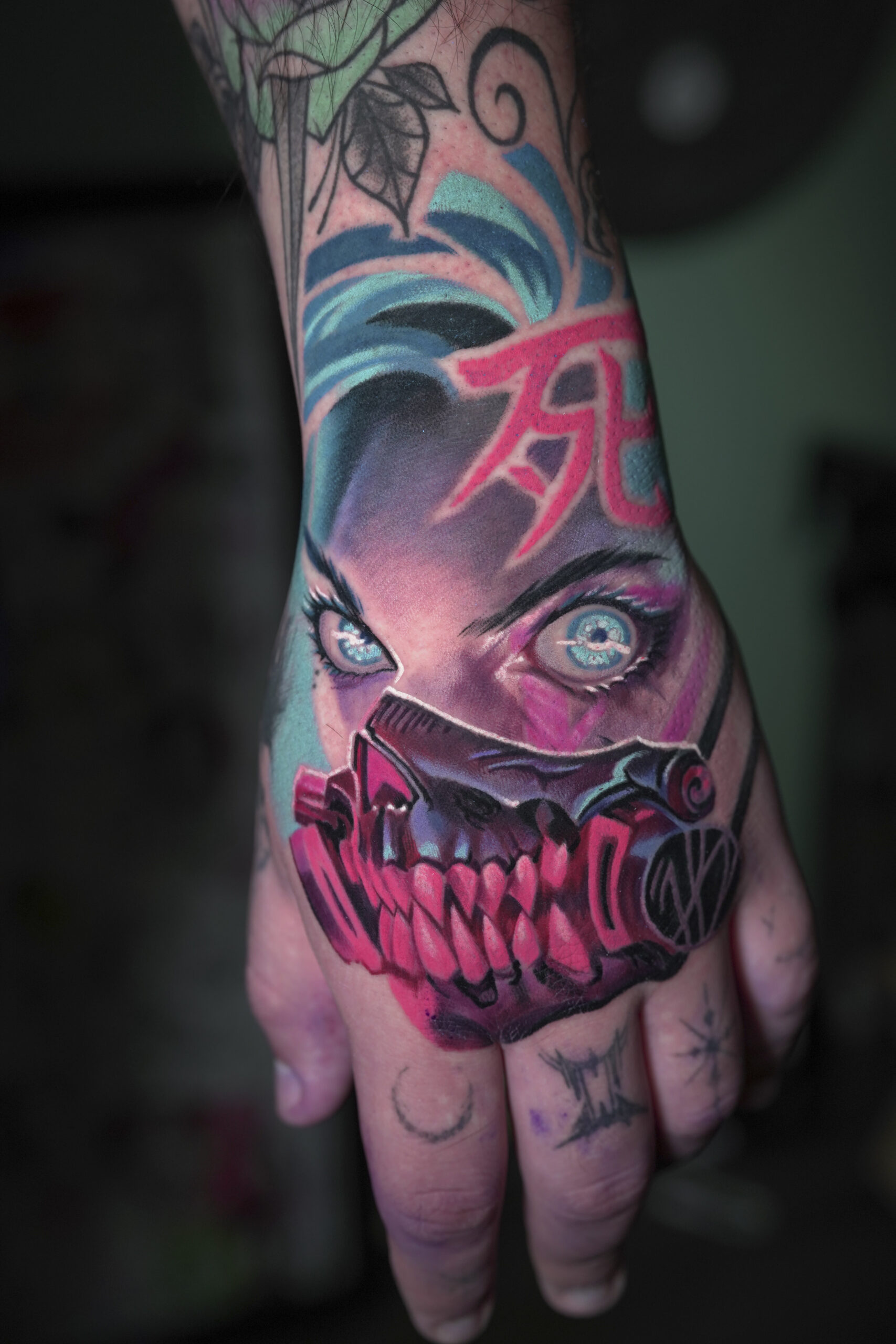
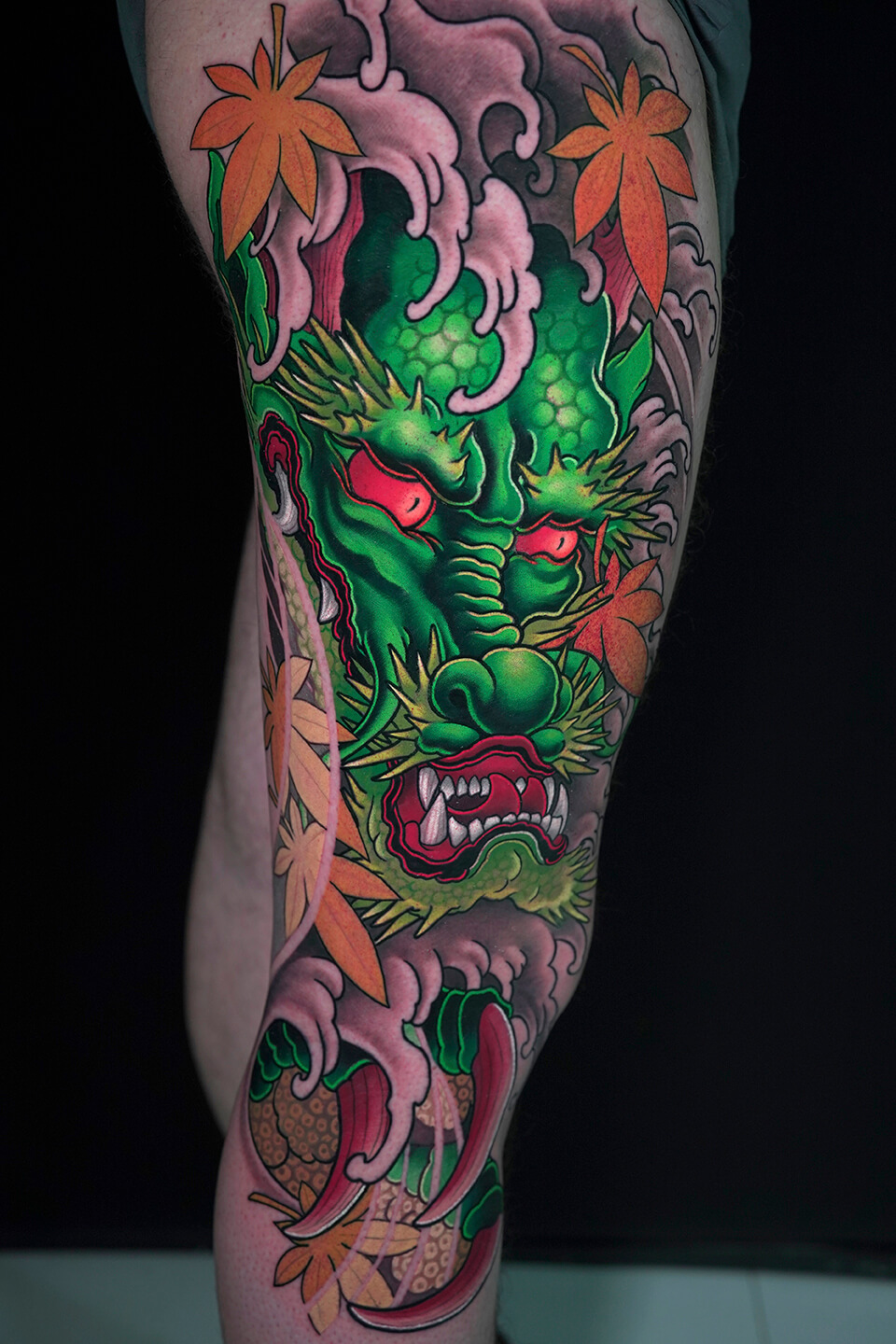
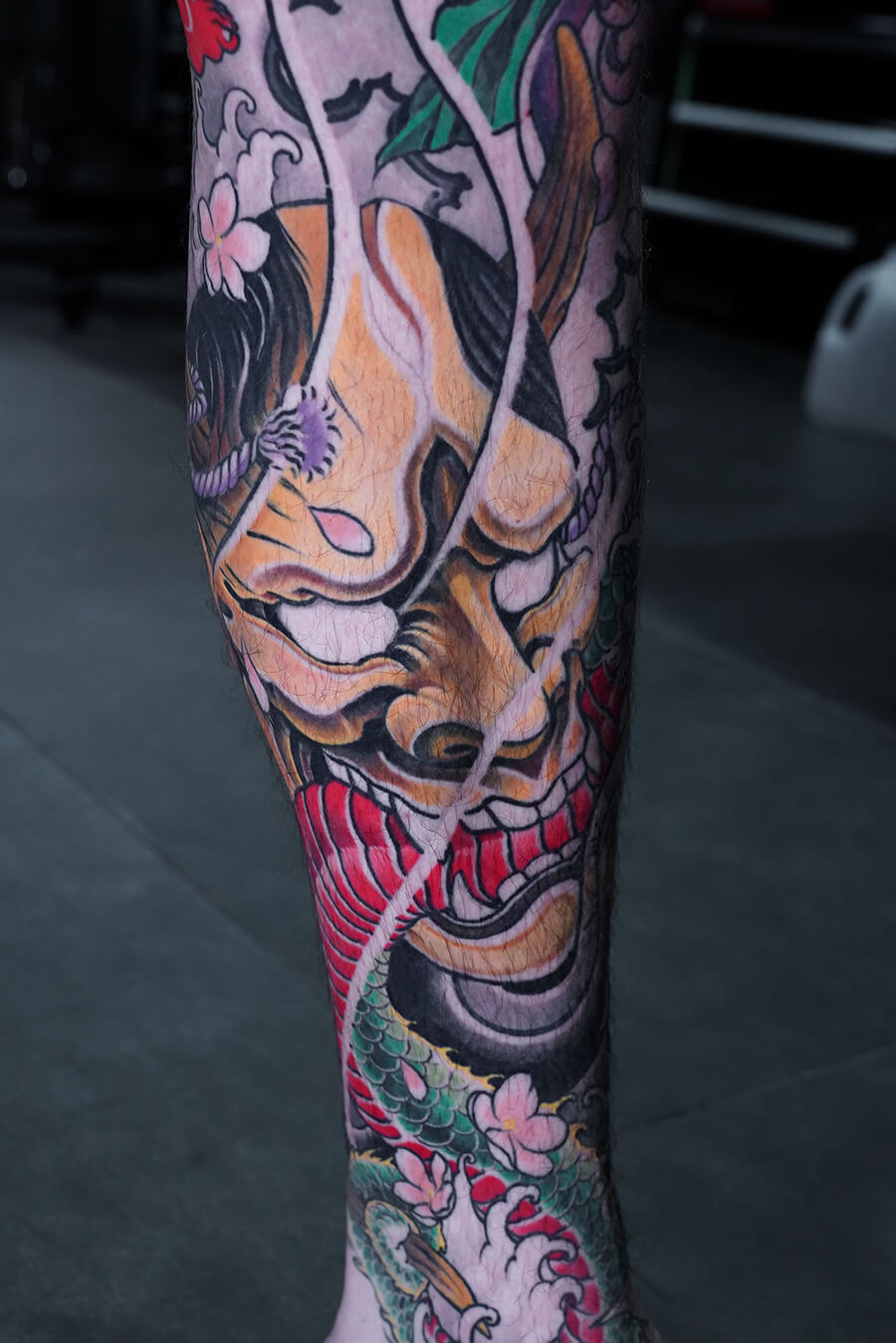
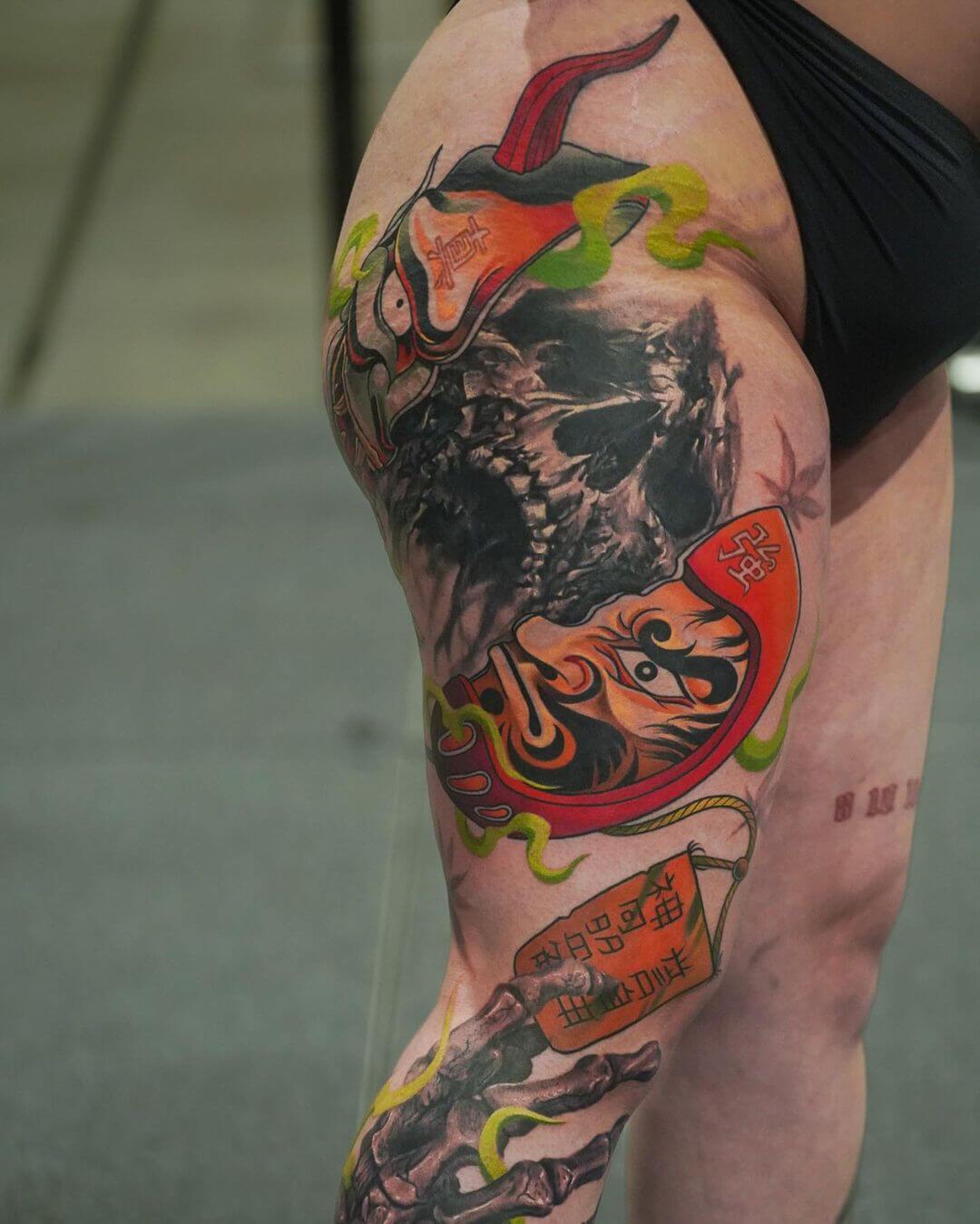
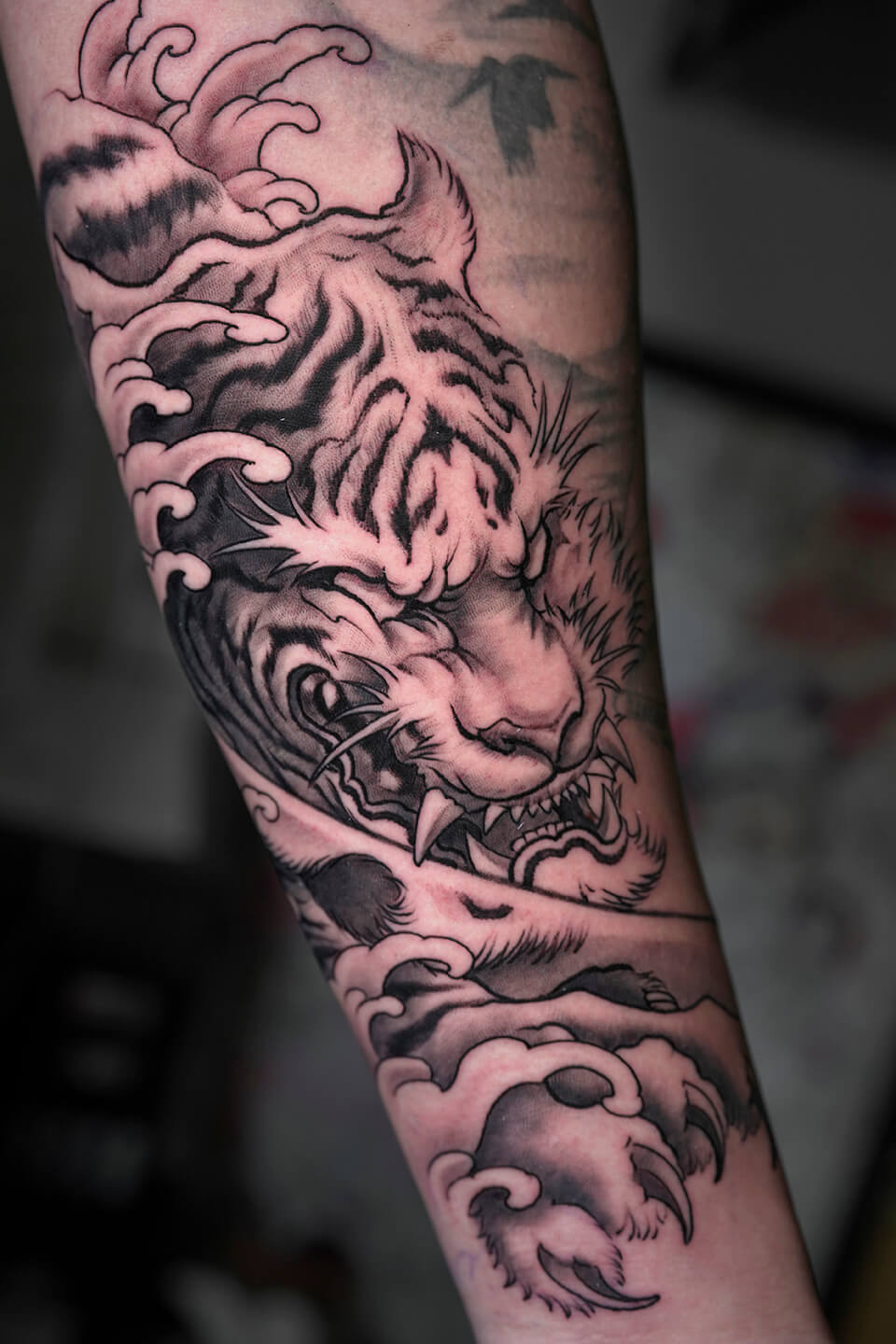
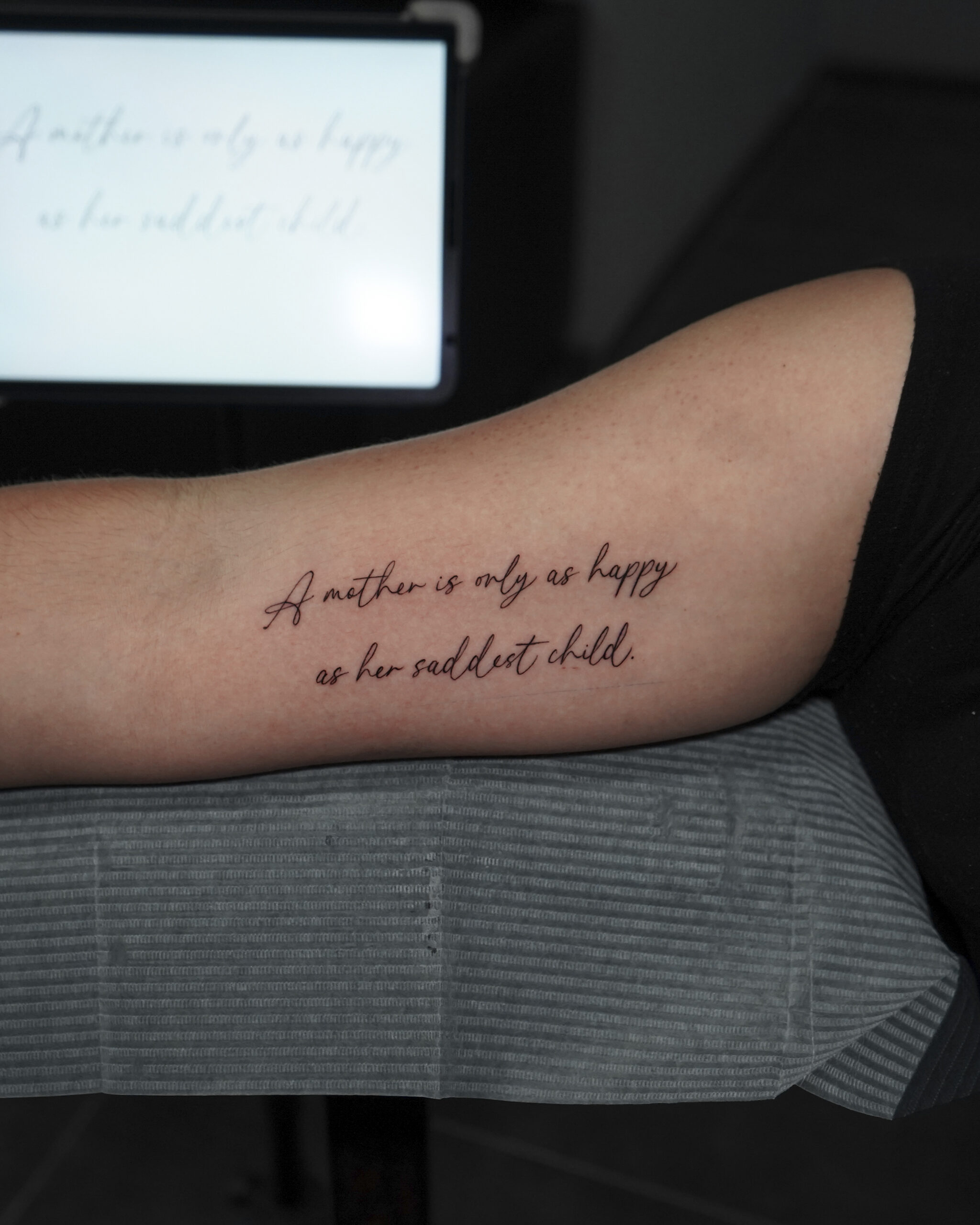
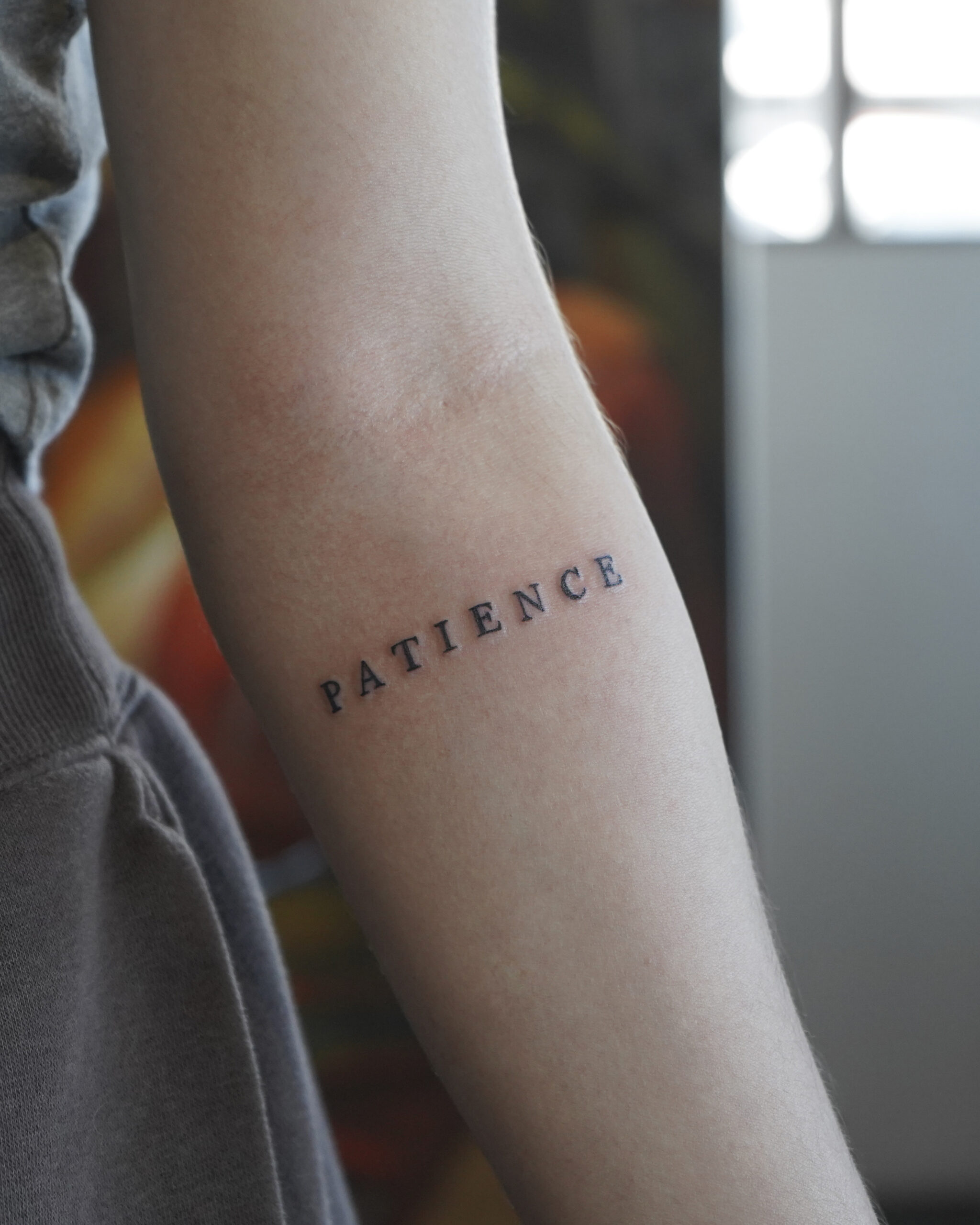
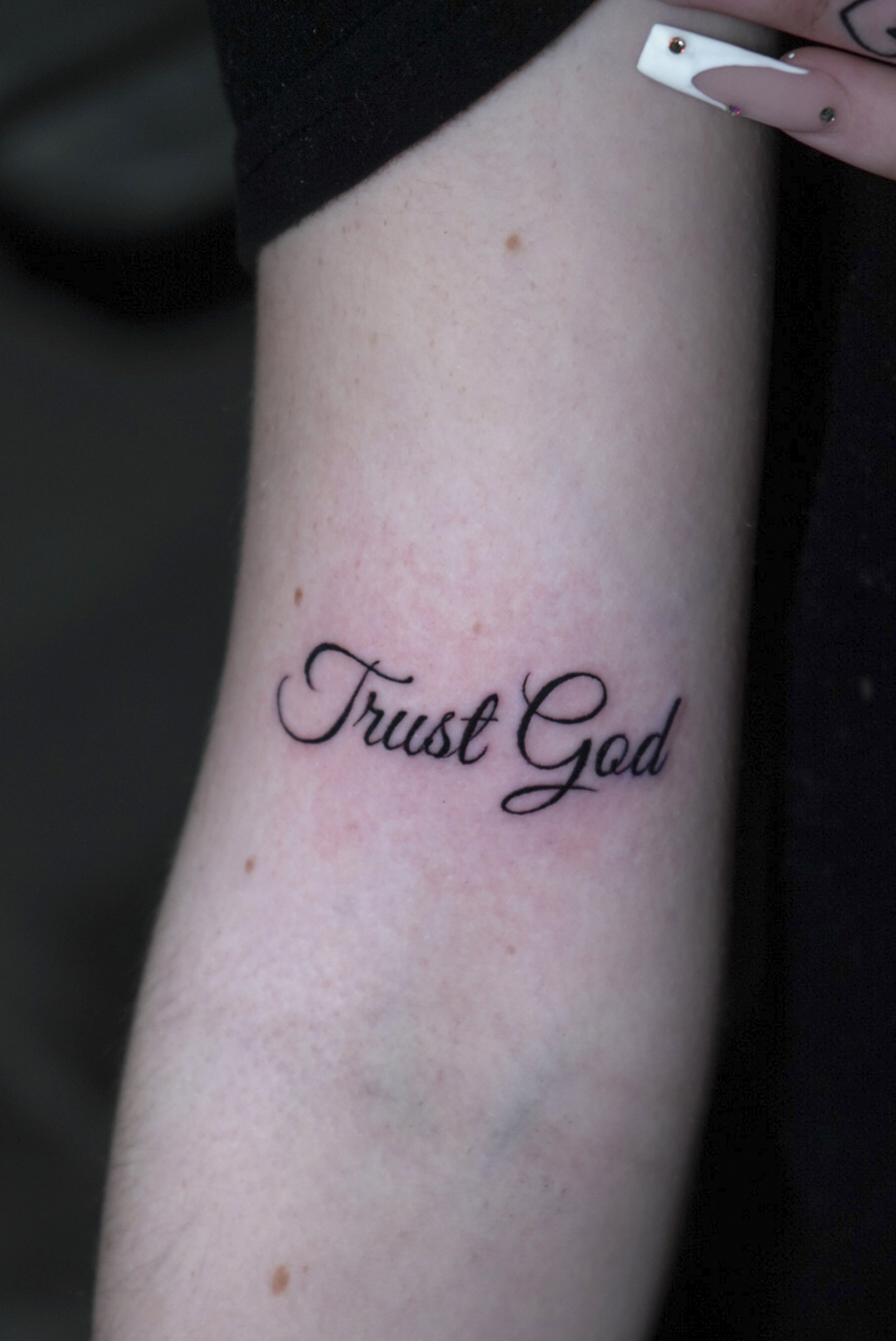
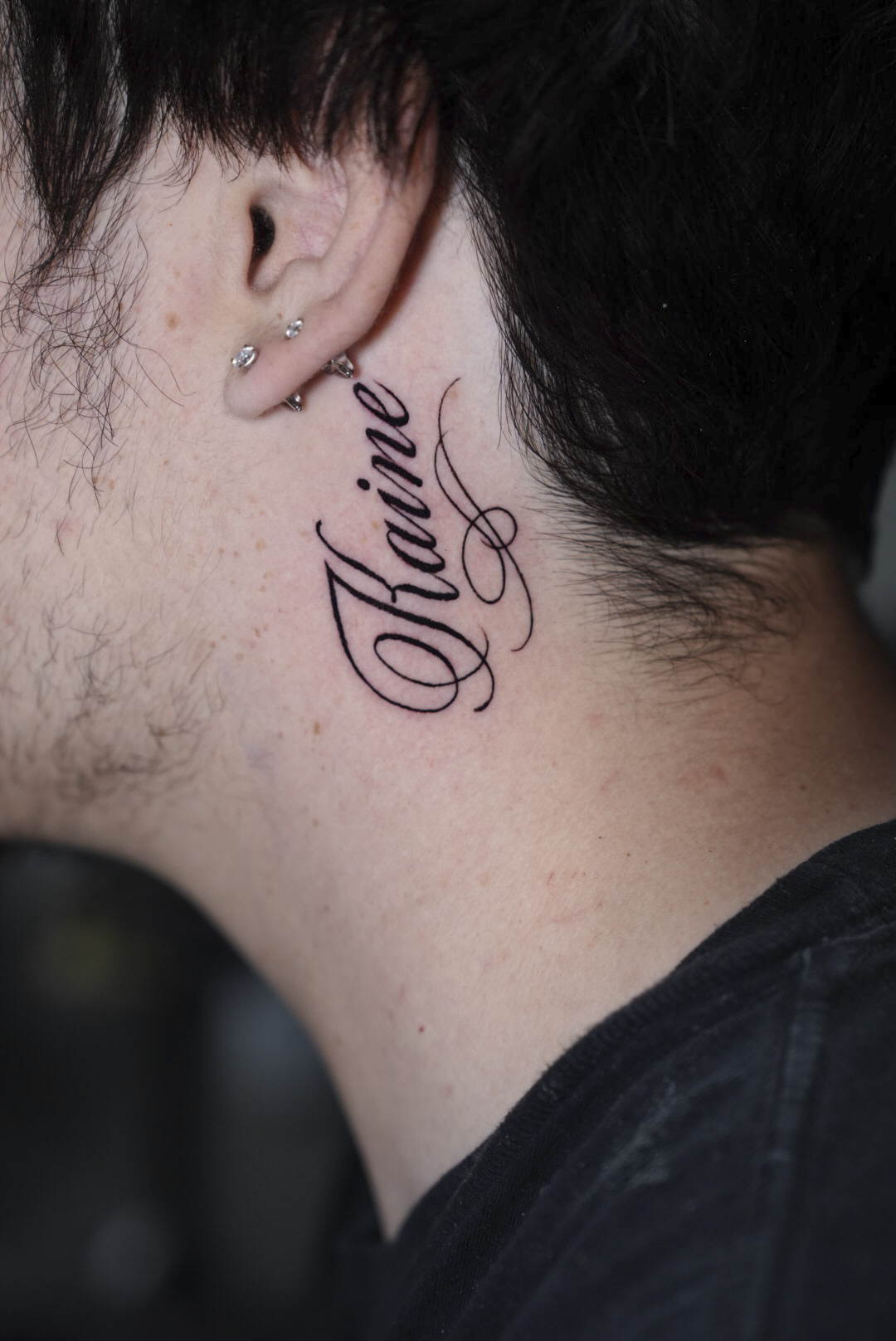
Tattoo sizes range from micro designs under 2 inches to large statement pieces over 6 inches. These sizes are categorized by dimensions in inches and centimeters, by everyday objects of the same size, by the part of the body they sit on, and by the session each size needs.
Tattoo dimensions come down to one number: the design’s longest edge. US studios measure it in inches, while most other countries use centimeters. Tattoo size decides the session length: a small piece is done in under an hour, while a large one takes several sittings. Cost follows those hours, from a shop minimum on small pieces to four figures at the top of the range.
Size affects design complexity, placement options, pain levels, healing time, and cost. A design that looks great on a screen will not always hold up at the same size on your skin, because skin stretches and moves underneath it.
This tattoo size guide covers the tattoo size chart, what counts as small, medium, or large, the sizes people ask for by name, how many inches each body area holds, what to weigh when choosing a size, and the average session time and cost for each size.
Tattoo Size Chart
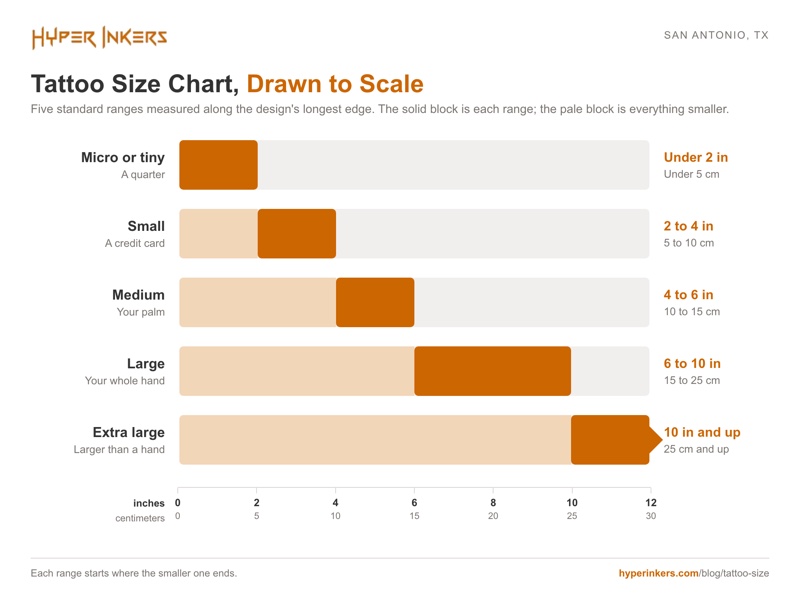
Tattoo sizes are grouped into five standard ranges, micro or tiny, small, medium, large, and extra large, spanning under 2 inches to 10 inches and beyond, with each range setting its own session length and price. The final size inside a range depends on design complexity and the placement area.
The standard tattoo size ranges are listed below.
| Size | Inches | CM | Compares To | Typical Session | Typical Cost |
| Micro or tiny | Under 2 in | Under 5 cm | A quarter | Under 1 hour | $60 to $100 |
| Small | 2 to 4 in | 5 to 10 cm | A credit card | 1 to 3 hours | $60 to $250 |
| Medium | 4 to 6 in | 10 to 15 cm | Your palm | 3 to 5 hours | $150 to $450 |
| Large | 6 to 10 in | 15 to 25 cm | Your whole hand | 6 to 10 hours | $480 to $2,500 |
| Extra large | 10 in and up | 25 cm and up | Larger than a hand | 10+ hours, multiple sessions | $800 and up |
Each inch range starts where the smaller one ends, so a 4 inch design lands in the medium range and a 6 inch design lands in the large range.
A 1 inch design measures about 2.5 cm, which places it inside the micro range next to a quarter. The 3 to 4 inch band works out to roughly 7.5 to 10 cm and stays inside the small range, because 4 inches is the point where a design crosses into medium.
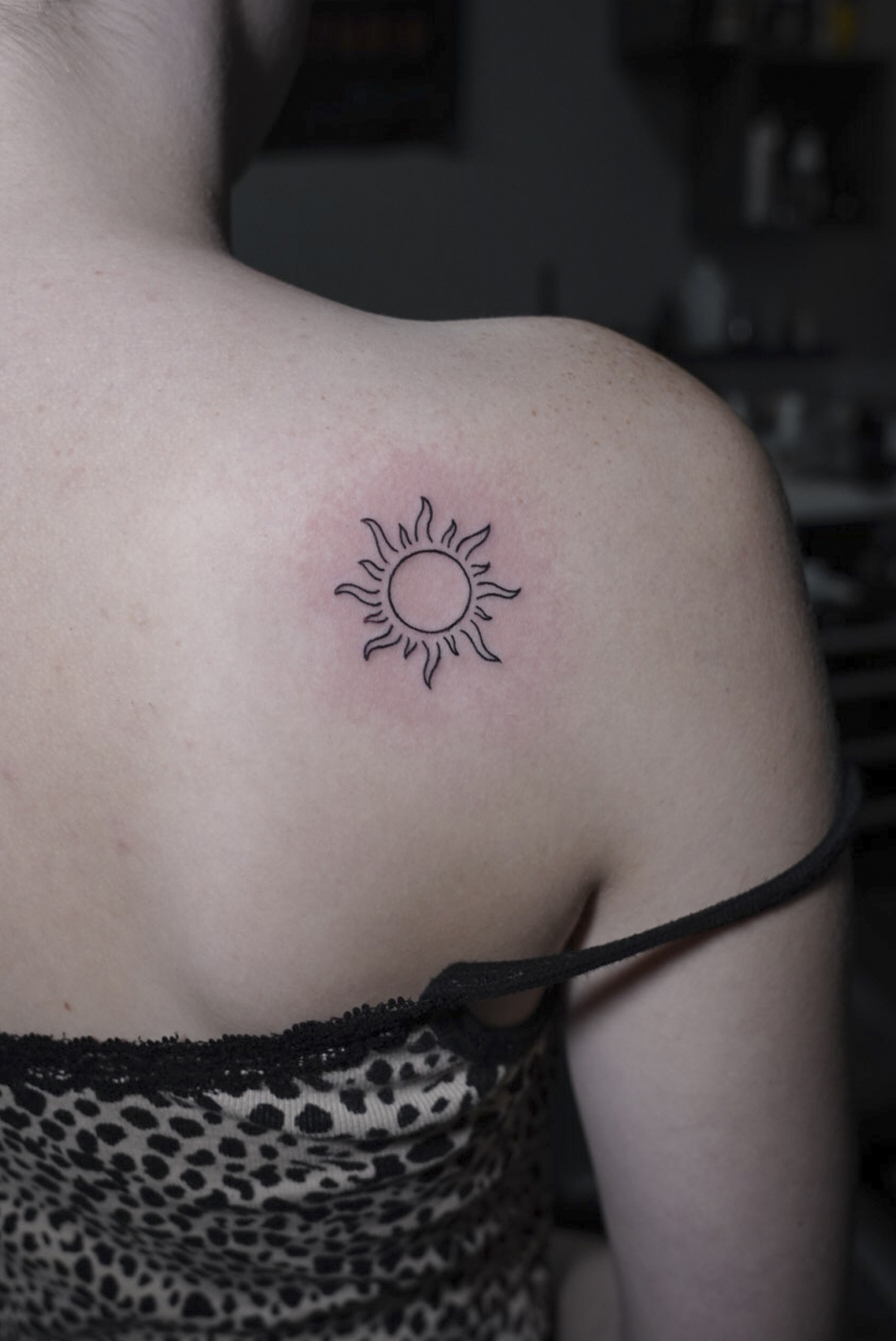
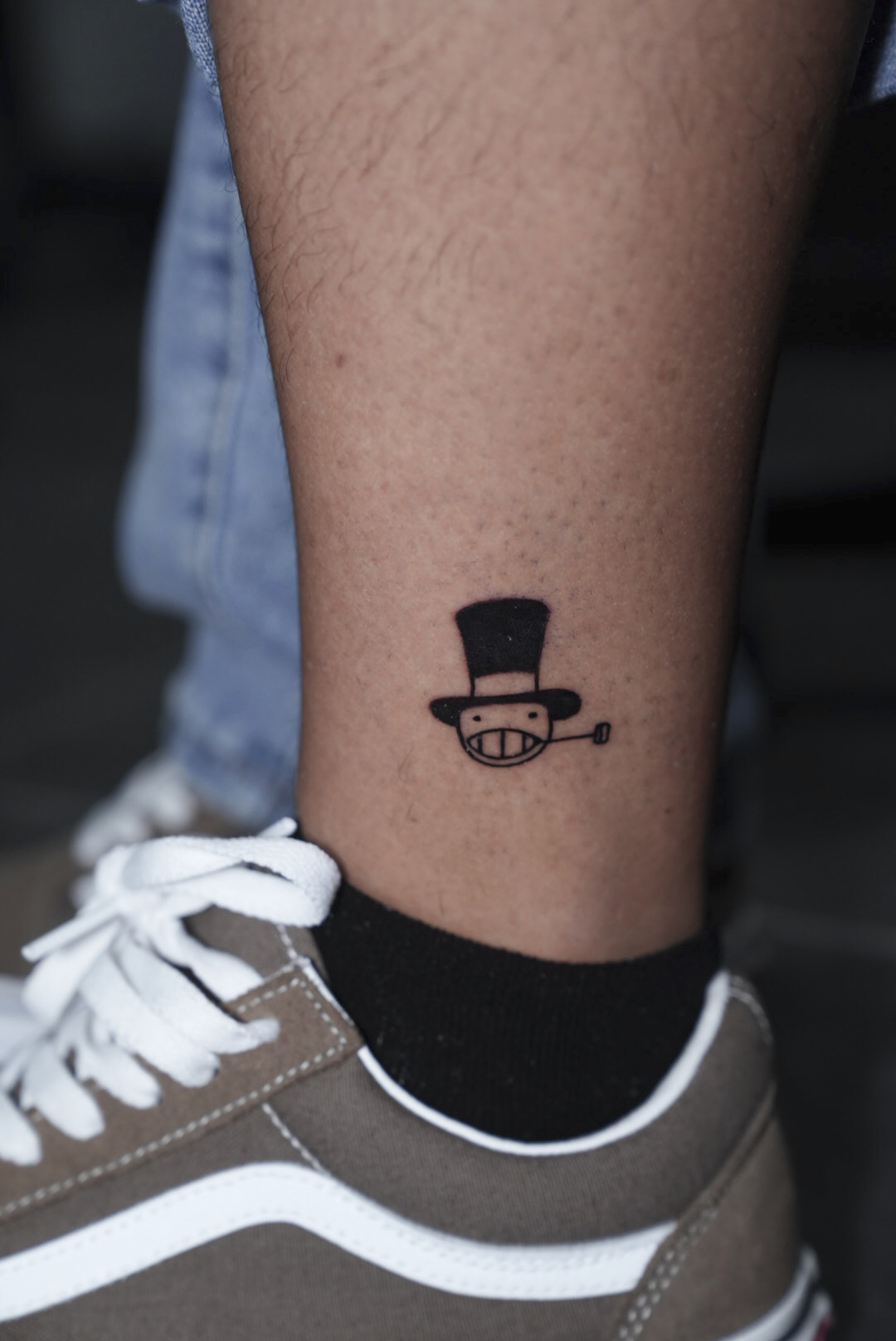
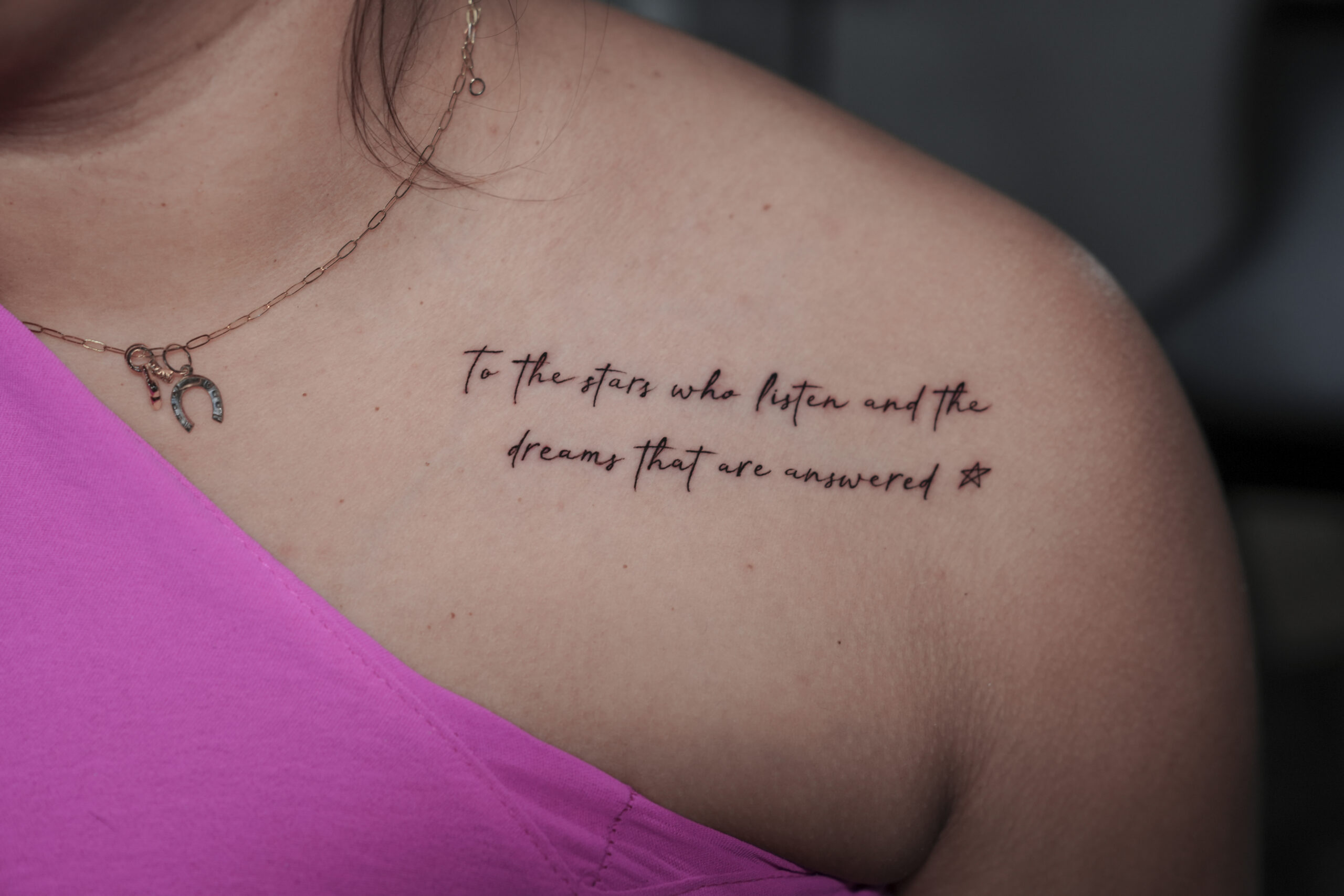
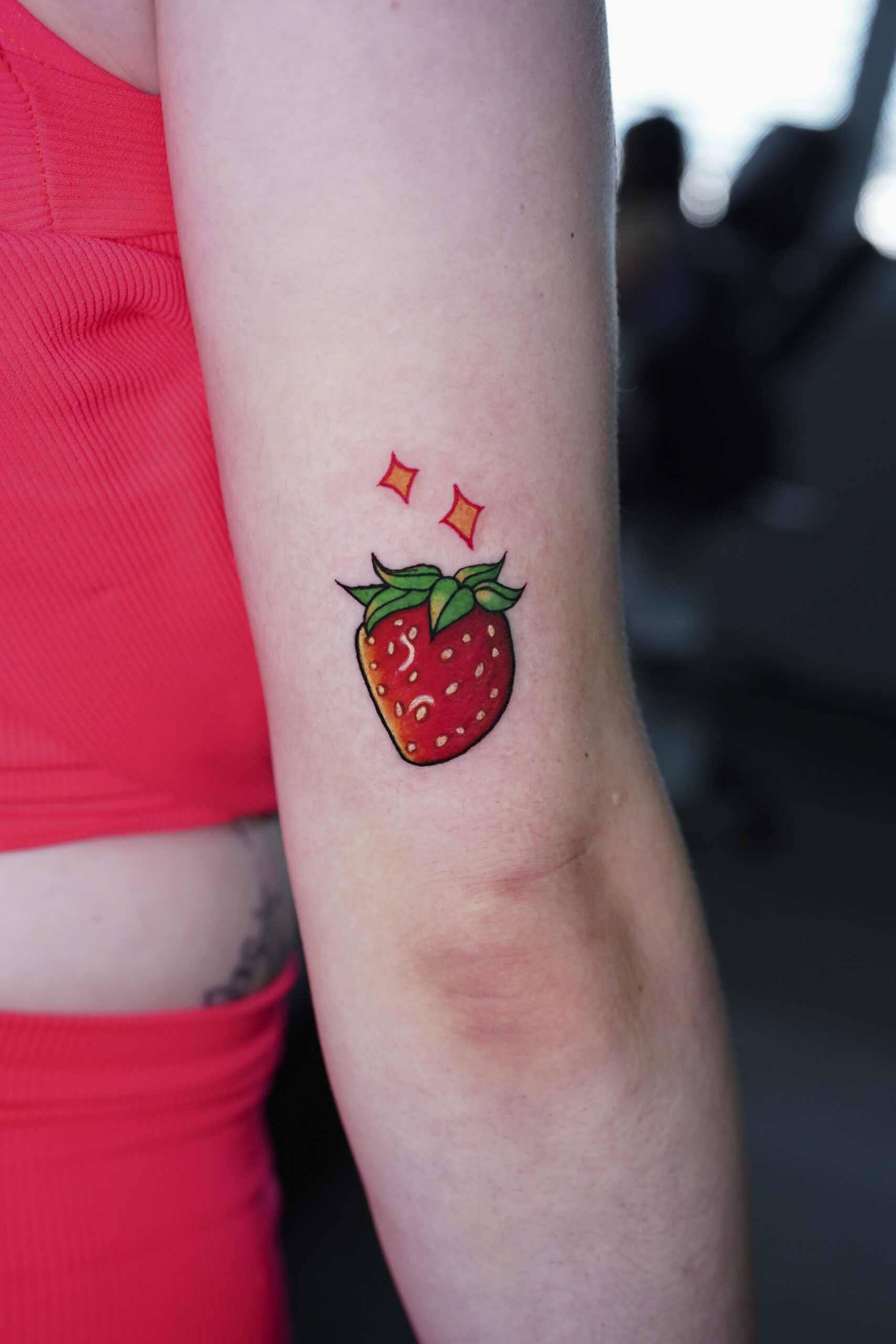
The same five ranges are drawn to scale in this tattoo size chart.
Clients and artists do not always mean the same thing by small, medium, and large.
What Is Considered a Small, Medium, or Large Tattoo
A tattoo is considered small at 2 to 4 inches, medium at 4 to 6 inches, and large at 6 to 10 inches, and crossing from one range into the next changes what the design can carry.
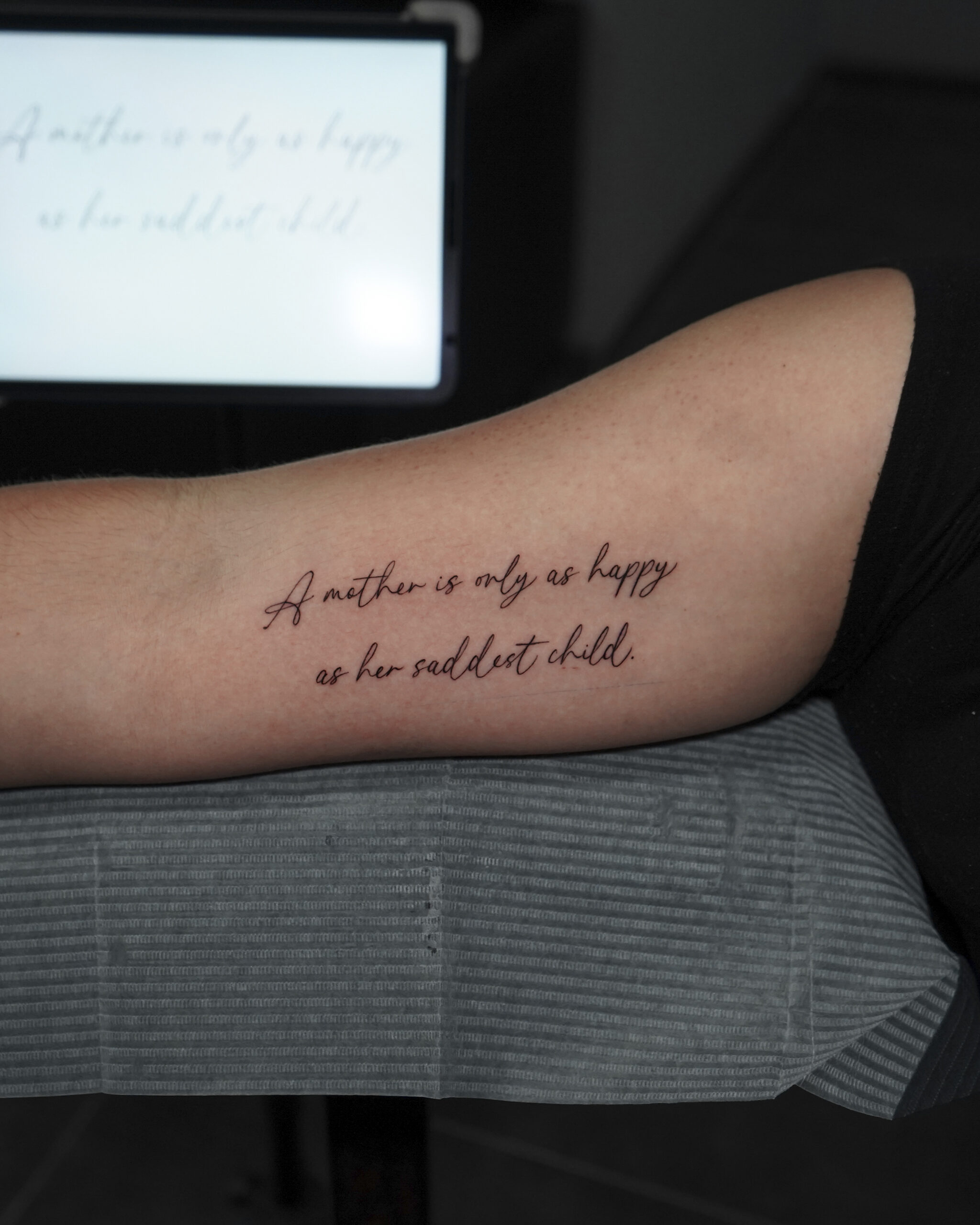
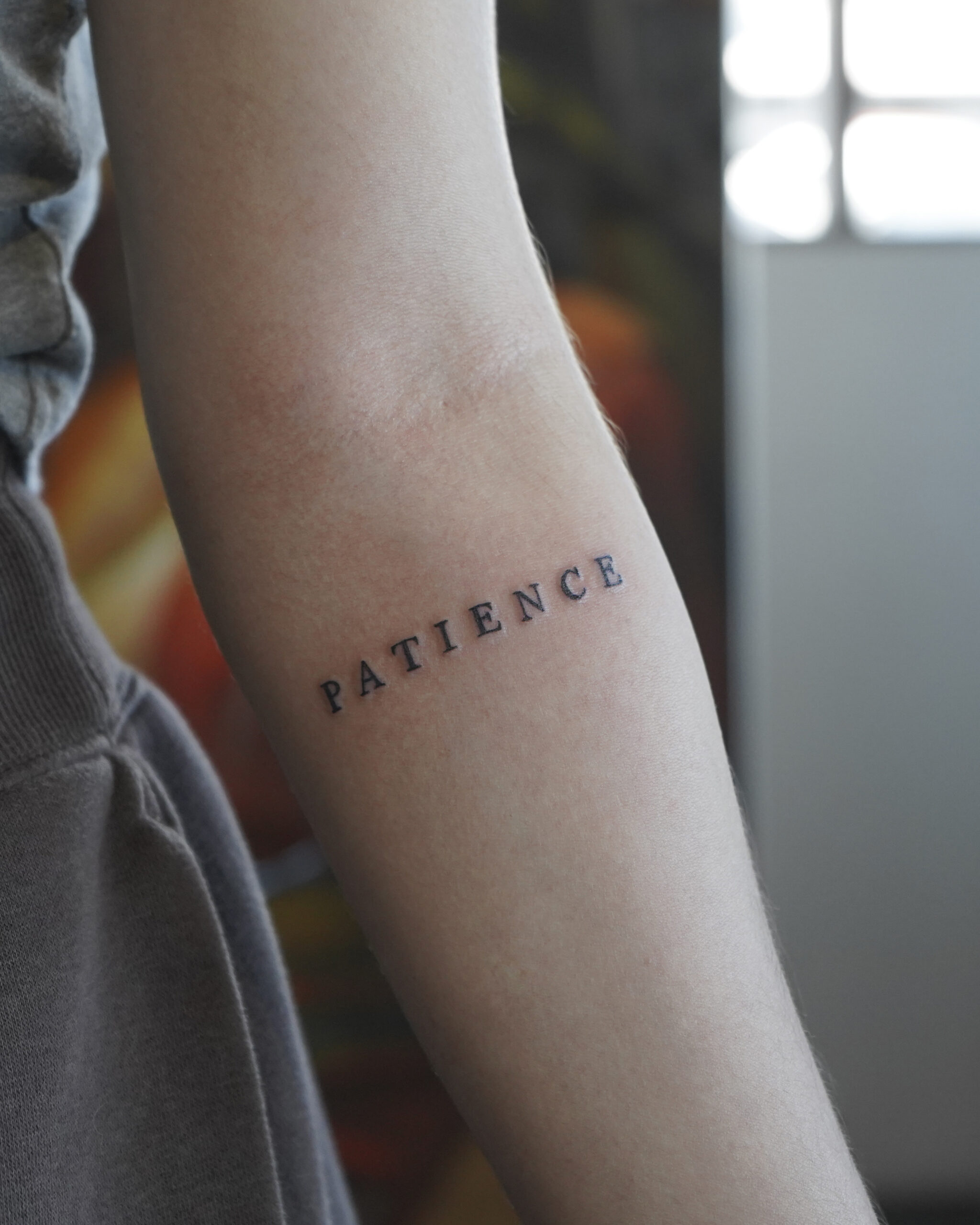
- Small: At 2 to 4 inches, small work holds one clear idea and nothing competing with it. A single line drawing, a short word, or a plain symbol survives here because the lines stay far enough apart to read clearly as the ink spreads over the years.
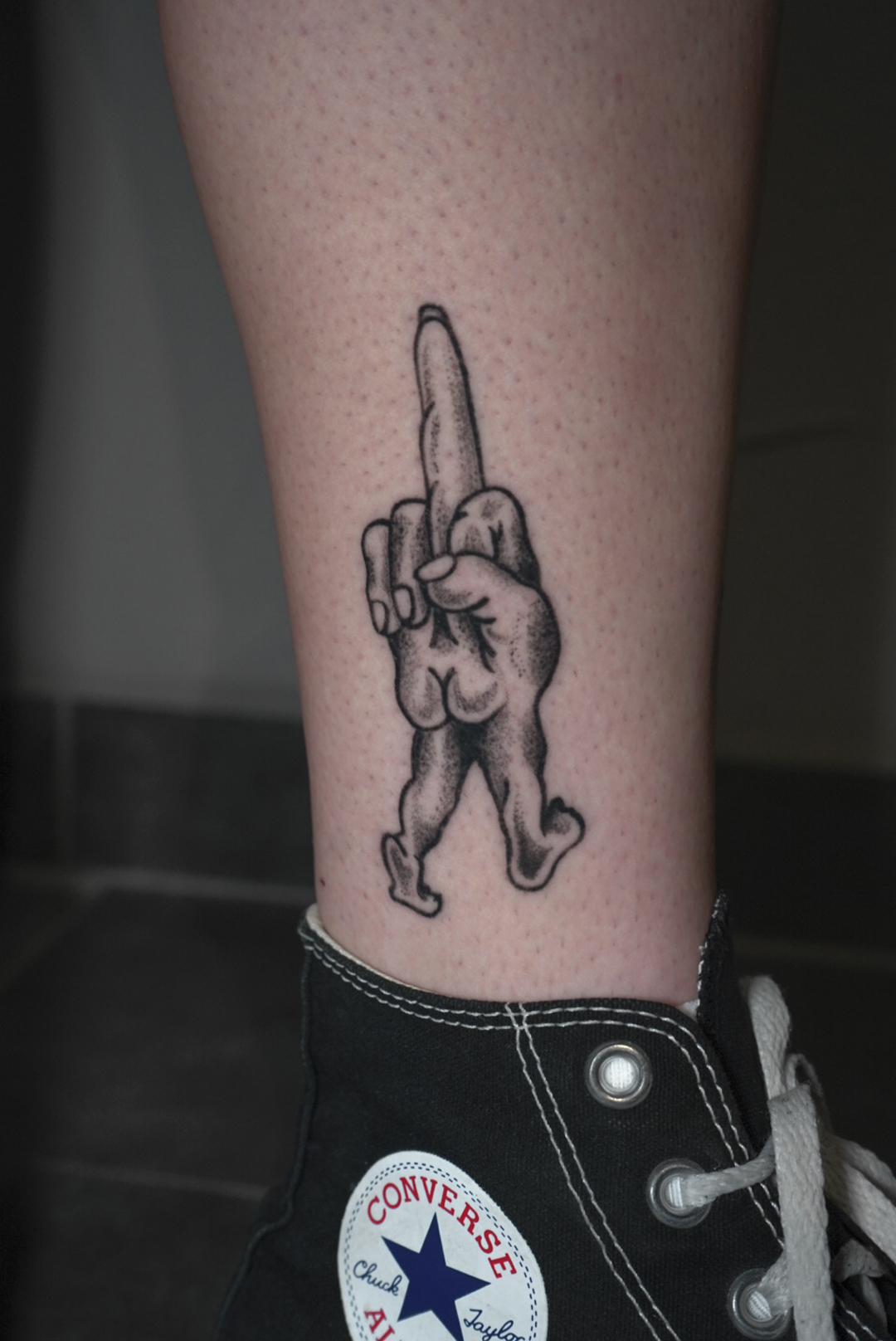
- Medium: At 4 to 6 inches, shading becomes possible. Gradual transitions between dark and light need physical distance to sit in, and a medium piece is the first size that gives them room. Portraits, flowers with depth, and anything built on light and shadow start to work here.
- Large: At 6 to 10 inches, a design becomes a composition rather than a single image. A large piece carries a foreground, a background, and a direction of flow that has to follow the muscle underneath, so the artist plans it around the body’s contour before even starting the tattoo.
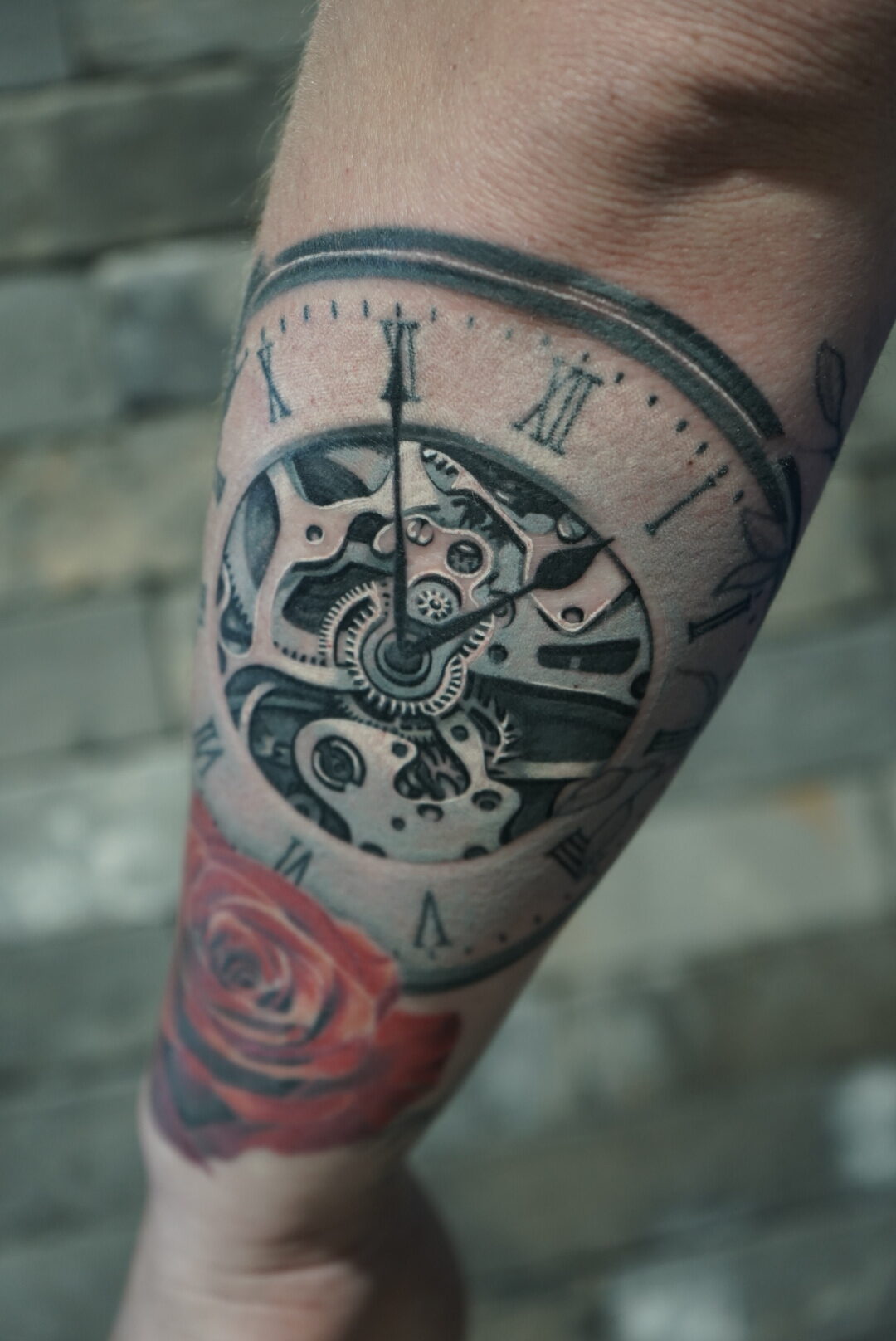
A forearm gives you about 4 inches of usable width. A 4 inch piece fills a forearm and floats on a back.
What Is a Palm Size Tattoo
A palm size tattoo is the measurement artists use for a design that roughly matches the area of an adult palm with the fingers excluded, about 3 to 4 inches, or 7 to 10 cm. Artists reach for a hand instead of a ruler because a client pictures it instantly. It is not the same as a hand size tattoo, which is measured across the whole hand with the fingers extended.
Most people arrive with an exact number in mind rather than a label.
Common Tattoo Sizes
The most common tattoo sizes run from 2×2 to 6×6, or 2 to 6 inches, and each one is written two ways, as a square format and as the single inch measurement artists work from. A square format describes a design laid out flat, the way most people picture it on a screen, while the single number is the longest edge of the finished stencil.
Here is a detailed breakdown of standard dimensions.
2×2 Tattoo Size (2 Inch Tattoo)
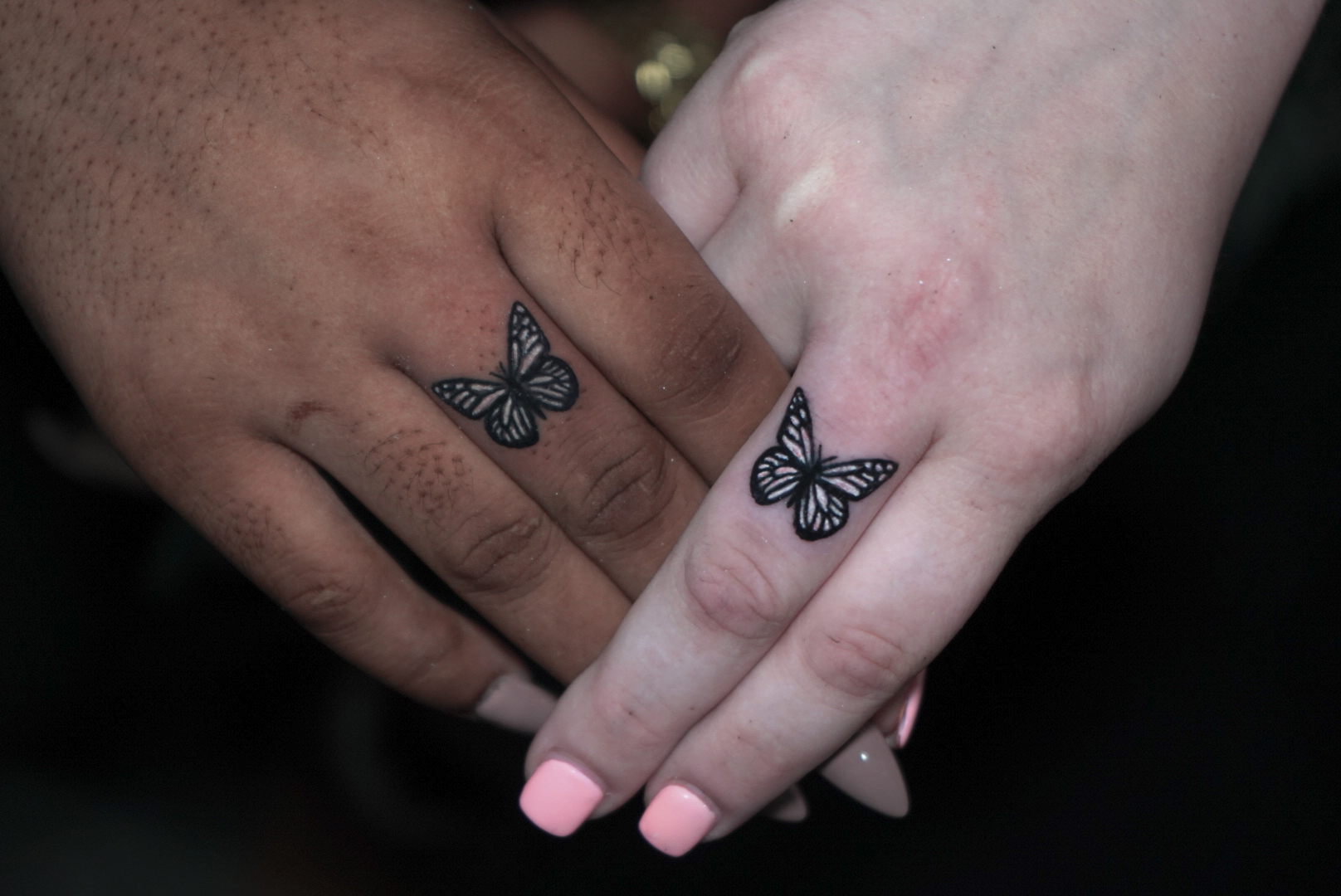
A 2×2 inch tattoo measures 2 inches along its longest edge (approximately 5×5 cm), which places it at the bottom of the small range. It holds one simple shape at a time, so small geometric patterns, tiny animals, short text, small flowers and plain icons like hearts, stars or anchors all work at this size.
A shirt sleeve or a watch strap covers a 2×2 piece completely.
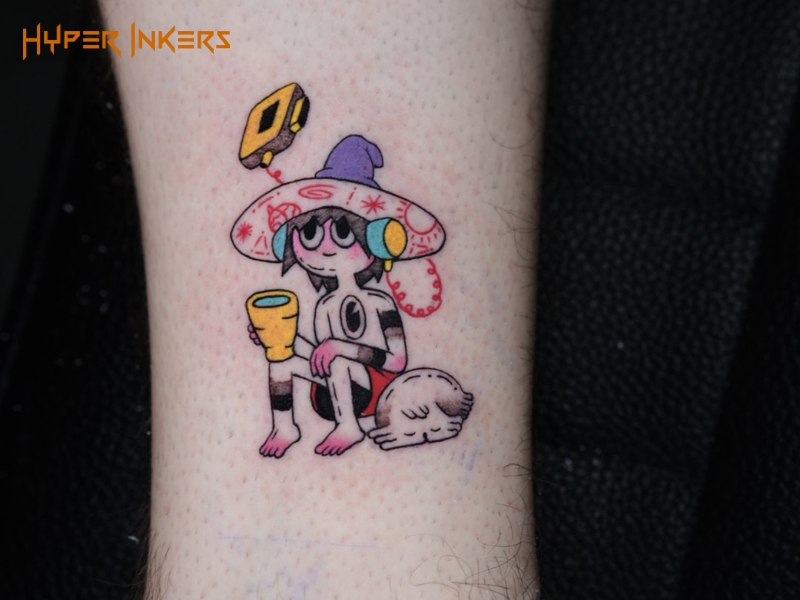
Time & Cost: The process usually takes 1–2 hours from stencil to wrap, depending on complexity and color. Black and gray tattoos typically finish faster than color ones. Expect to pay between $60–$100, though prices vary by location, artist experience, and studio reputation.
3×3 Tattoo Size (3 Inch Tattoo)
A 3×3 inch tattoo measures 3 inches along its longest edge (approximately 7.5×7.5 cm), still inside the small range. The extra inch takes intricate symbols, small portraits, medium flowers or a quote of a few words.
It still fits everywhere a 2×2 fits.
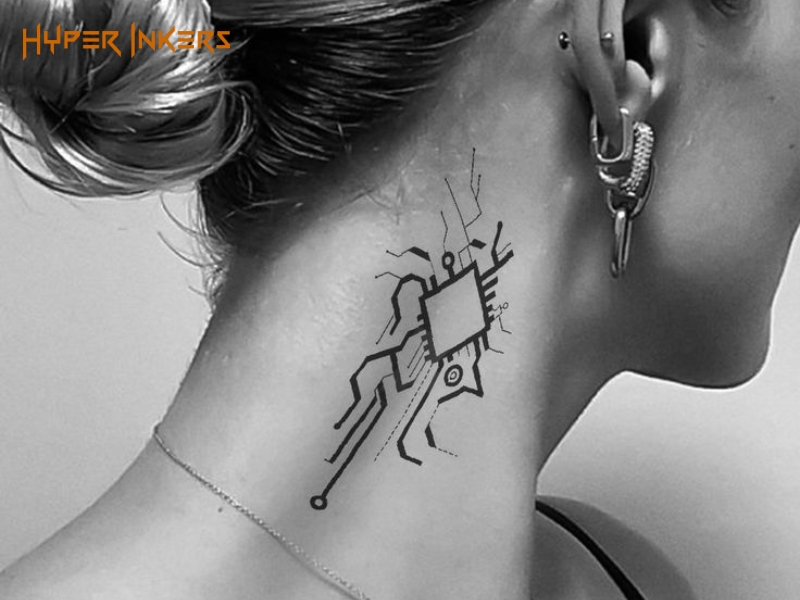
Time & Cost: Most 3×3 tattoos take 1–2 hours to complete. Prices typically range from $100–$250, depending on design complexity and artist reputation. It offers room for personalization without requiring a large time or financial investment.
4×4 Tattoo Size (4 Inch Tattoo)
A 4×4 inch tattoo measures 4 inches along its longest edge (approximately 10×10 cm), the point where a tattoo crosses into the medium range. Four inches is where background elements start to fit, so detailed illustrations, small scenes, medium portraits, elaborate flowers and symbols with something drawn behind them all become possible.
It sits on a forearm, a calf or a shoulder without running out of room.
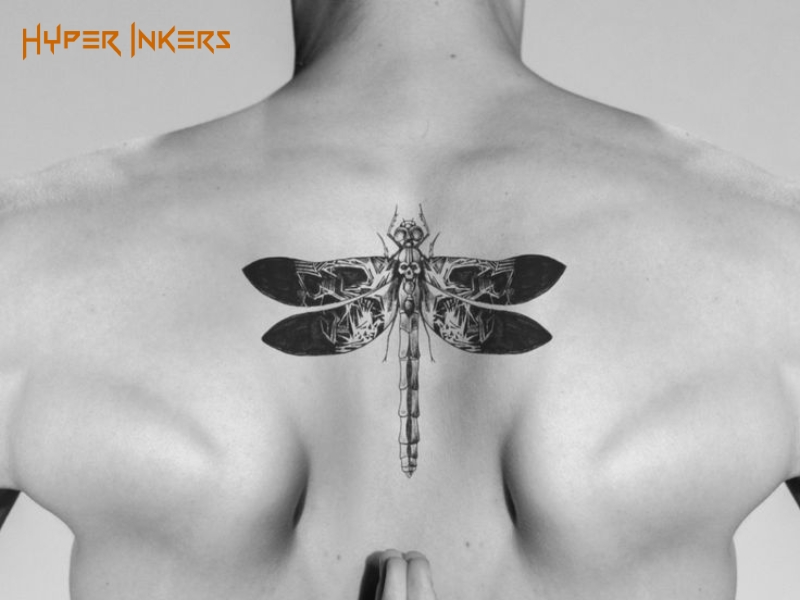
Time & Cost: These tattoos typically take 3–4 hours to complete. Complex color work may extend the session. Pricing usually falls between $200–$400, though premium artists may charge more.
5 Inch Tattoo Size
A 5 inch tattoo measures 5 inches along its longest edge (approximately 12.5×12.5 cm), in the upper half of the medium range. This size allows for fuller shading and a background that reads as real depth rather than decoration, and it is the size to move to when a 4 inch reference turns out to hold heavy detail.
The extra inch buys depth without moving the piece into large territory.
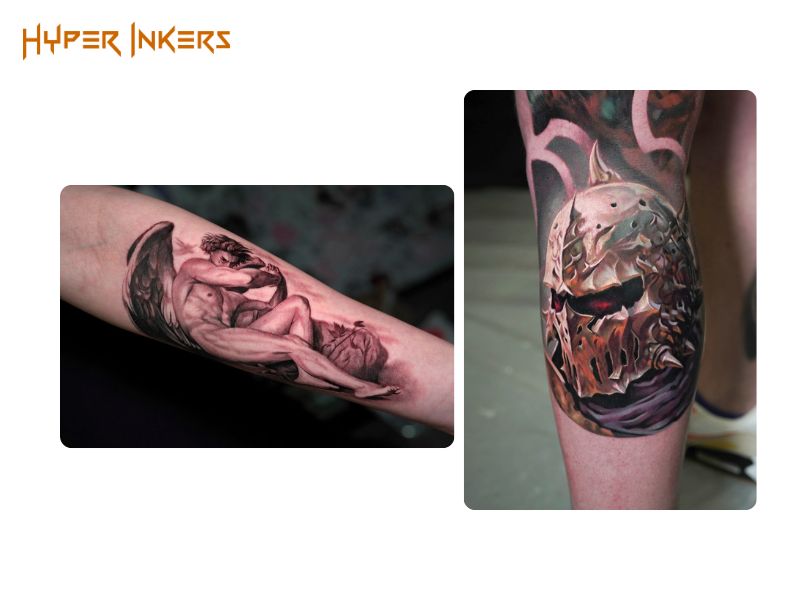
Time & Cost: These tattoos usually take 4–5 hours, sitting between a 4×4 and a 6×6 on both counts. Expect to pay $300–$450, depending on shading density and whether the design runs in color.
6×6 Tattoo Size (6 Inch Tattoo)
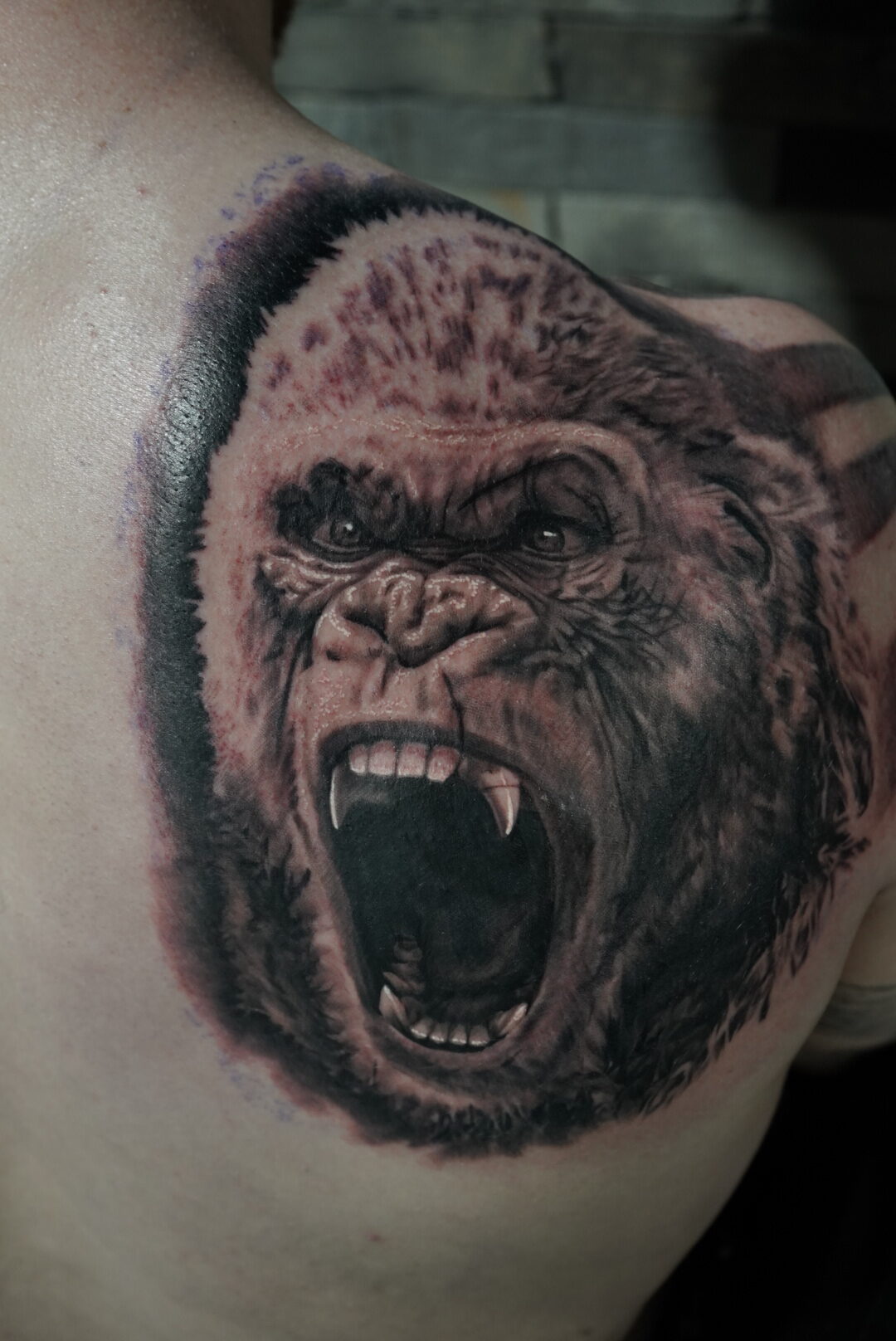
A 6×6 inch tattoo measures 6 inches along its longest edge (approximately 15×15 cm), where a tattoo enters the large range. Six inches is the first size that takes a realistic portrait, a full color scene, an animal or a detailed mandala with full shading and color.
Texture becomes visible at this size, which is what separates a 6×6 from the same design at 4×4.
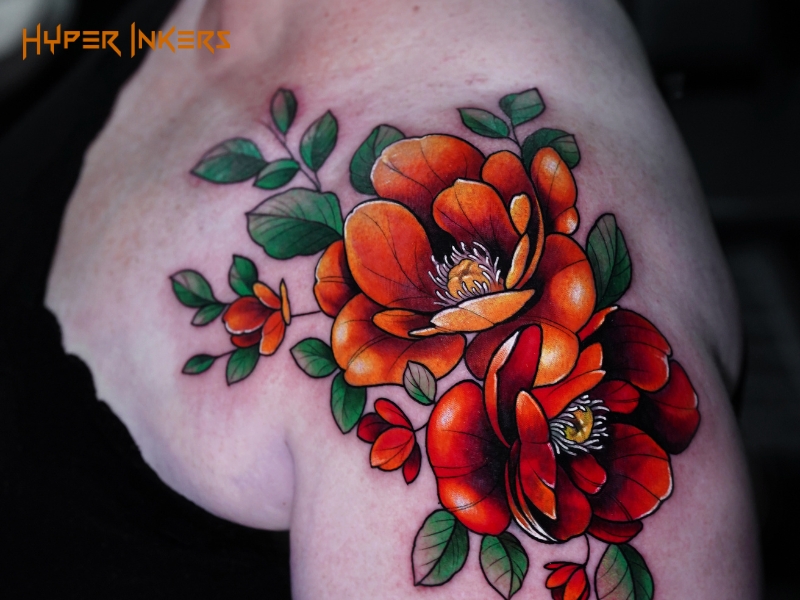
Time & Cost: These tattoos usually take 6–8 hours and may require multiple sessions for detailed color work. Expect to pay $480–$800 or more, depending on the artist’s skill, location of the tattoo, and design complexity.
Tattoo Size by Body Placement
Tattoo size by body placement runs from 1 to 3 inches at a wrist up to 15 to 24 inches for a full sleeve, measured along the length of the area it sits on.
The tattoo size each area takes is listed below.
| Tattoo Size | CM | Placement |
| 1 to 3 in | 2.5 to 7.5 cm | Wrist, ankle, finger, behind the ear |
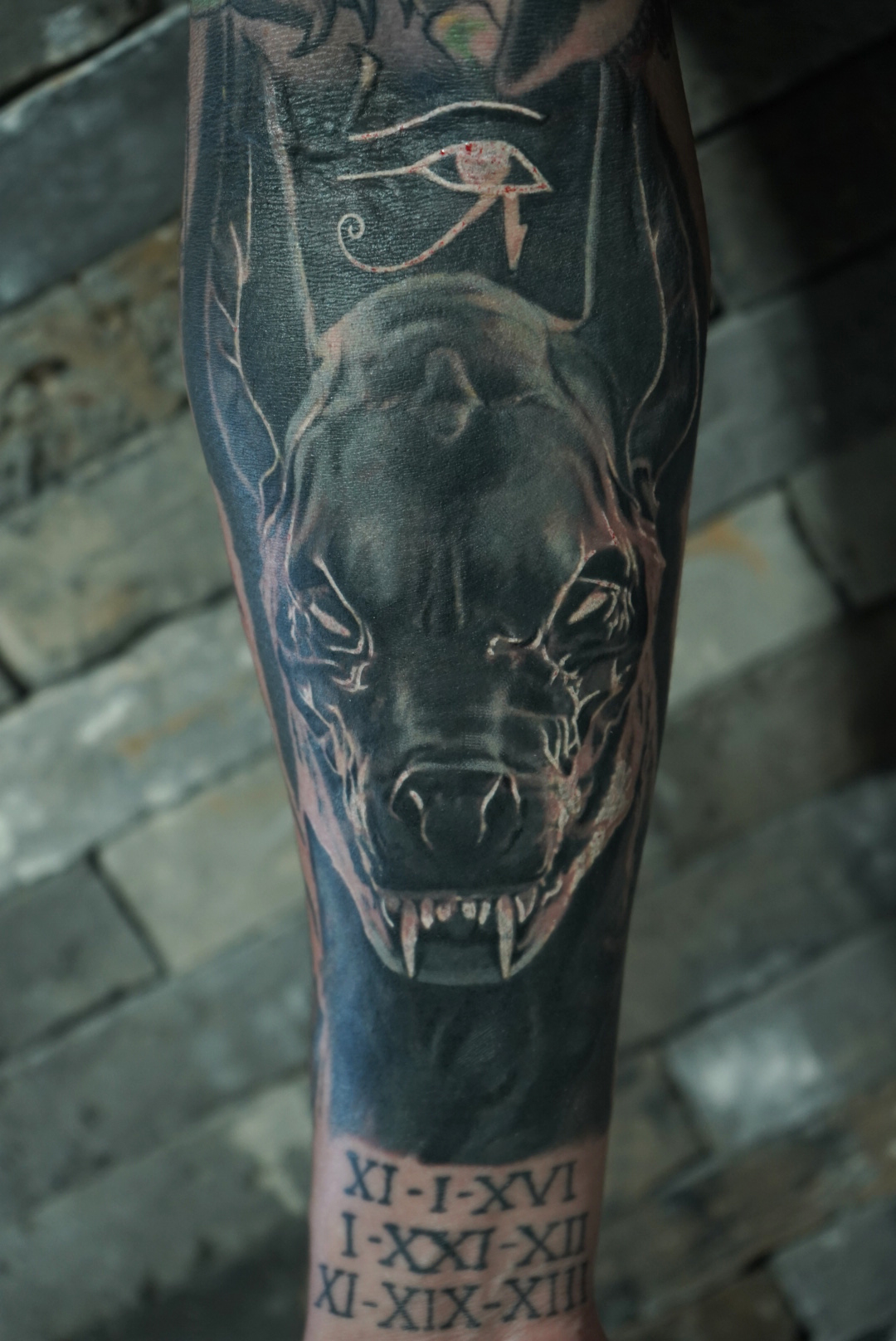
| 3 to 7 in | 7.5 to 18 cm | Forearm (full panel 8 to 12 in) |
| 4 to 6 in | 10 to 15 cm | Upper arm, bicep |
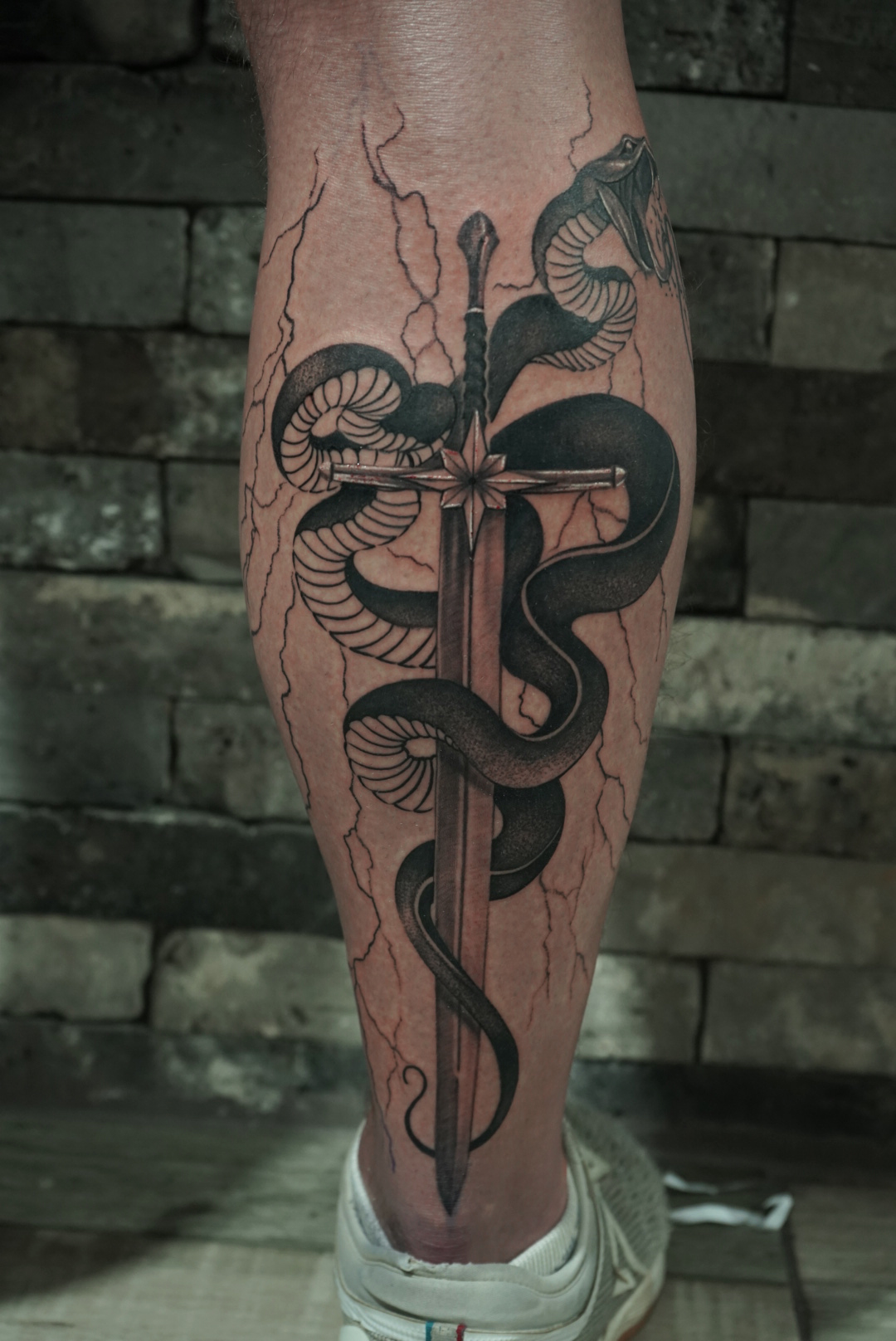
| 4 to 8 in | 10 to 20 cm | Calf, shoulder, ribs and side |
| 6 to 10 in | 15 to 25 cm | Chest and collarbone (full panel 12 to 15 in), quarter sleeve |
| 6 to 12 in | 15 to 30 cm | Thigh |
| 8 to 12 in | 20 to 30 cm | Back (full back 18 by 24 in), half sleeve |
| 15 to 24 in | 38 to 60 cm | Full sleeve |
What sets each number is how much flat surface an area gives before it curves out of view. A wrist runs out at about 3 inches, and anything past that starts wrapping around the joint, while a thigh or a back holds its shape long enough to carry a design ten inches down. Forearm tattoo size falls between the two, quoted at 3 to 7 inches on its own and 8 to 12 inches as a full panel from elbow to wrist.
Sleeves are the case where one number does not describe the job. A half sleeve listed at 8 to 12 inches still has to cover the full circumference of the arm as well as its length.
Design complexity, pain tolerance, budget and how the piece ages decide the final number.
Factors to Consider When Choosing Tattoo Size
The factors to consider when choosing tattoo size are listed below.
- Design Complexity: Intricate designs require larger sizes to preserve detail. Attempting them in small formats can lead to blurring over time.
- Placement Location: Body contours affect how tattoos appear and age, so consulting a Tattoo Placement Guide is recommended. High-friction areas such as the wrist and the ribs wear thin lines down faster than a flat forearm panel does.
- Pain Tolerance: Larger tattoos take longer and can be more painful. Sitting time is the part you can plan around, and splitting a large piece across two appointments keeps each session shorter.
- Healing Demands: Any tattoo surface takes 2 to 4 weeks to heal, so size changes how much skin you are protecting rather than how long you wait. A half sleeve means keeping a whole arm out of pools and hot tubs through those weeks, which is where the new tattoo care instructions do the work.
- Lifestyle Considerations: Smaller tattoos are easier to conceal, though placement decides this as much as size. A 4 inch piece on an inner bicep stays covered by a short sleeve while the same piece on a forearm does not.
- Budget Constraints: Bigger tattoos cost more. Shrinking a design purely to lower the price tends to cost more later, since a cramped piece usually needs reworking.
- Aging Effects: Tiny, detailed tattoos may blur faster. Simpler designs age better.
- Body Changes: Tattoos can stretch or shift with weight changes or pregnancy.
- Long-Term Satisfaction: Many people later wish they had chosen a larger size than the one they asked for.
Choosing tattoo size means weighing detail, placement, comfort, and cost against how the piece will read in ten years. The tattoo size factors that people forget to take into consideration the most are aging and long-term satisfaction, both resulting in the same regret.
Why Going Too Small Is a Common Tattoo Sizing Mistake
A design that is too small will break down in four ways as it ages: in line spacing, line weight, negative space, and ink density. A 1 inch flower on a forearm reads as a smudge from a few feet away, while a 4 inch version of the same flower stays legible across a room.
The ways a small tattoo size breaks down are listed below.
- Line spacing: Lines sitting close together meet first, because ink spreads sideways as the tattoo ages.
- Line weight: A hairline stroke carries less pigment than a bold one, so it softens sooner.
- Negative space: Bare skin inside a design is what disappears, taking the shapes it defined with it.
- Ink density: A smaller needle grouping deposits less ink at the correct depth, so the design fades rather than blurs.
Sizing up one inch, cutting the finest details, and letting the artist set a minimum on the skin all help the design last longer. Small is still right when the canvas itself is small, or when the design is a single bold symbol meant to read at a glance.
Session length is the other thing that changes as the size range goes up.
How Long Does It Take to Get a Tattoo Based on Its Size?
The time to get a tattoo based on its size ranges from under one hour for micro designs (under 2 inches [5.08 cm]) to 30-50 hours or more for very large scale projects like full back pieces, often spanning multiple sessions. While size is the primary determinant, the total duration is also significantly influenced by the design’s intricacy, color application, specific body placement, the artist’s working speed and technique, and unique client factors such as skin type and pain threshold.
Below is a general guide to tattoo session lengths based on common sizing, with explanations for the time involved:
- Micro or Tiny Tattoos – under 2 inches (5.08 cm): Application is under one hour. This duration reflects minimal line work, limited or no shading, and a small surface area, allowing for swift execution.
- Small Tattoos – 2 to 4 inches (5.08 to 10.16 cm): These require one to three hours. The increased time accommodates more detailed linework, basic shading for depth, or careful application of one or two colors.
- Medium Tattoos – palm-sized, 4 to 6 inches (10.16 to 15.24 cm): Completion time is three to five hours. This accounts for a larger surface area, increased complexity in linework, developed shading for form, or meticulous multi-color work.
- Moderately Large Tattoos – hand-sized up to quarter-sleeve elements, 6 to 10 inches (15.24 to 25.4 cm): These necessitate six to ten hours of work, often split into one or two sessions. Extensive linework, detailed shading or color packing, and challenging anatomical contours influence the duration.
- Half-Sleeve Tattoos – covering the upper or lower arm, approximately 8 to 12 inches (20.32 to 30.48 cm) in length plus circumference: These require 10 to 20 hours, completed over multiple sessions. The time is due to the large surface area, consistent application of lines, extensive shading or color fields, and layering of intricate details.
- Full Sleeve Tattoos – covering an entire arm from shoulder to wrist, approximately 15 to 24 inches (38.1 to 60.96 cm) in length plus full circumference: These are extensive projects demanding 20 to 40 hours or more, distributed across several appointments. Meticulously covering a large, three-dimensional surface and ensuring design cohesion necessitates this time.
- Full Back Pieces or Other Very Large Scale Projects – covering an area roughly 18 by 24 inches (45.72 by 60.96 cm) or larger: These represent the most significant time investment, requiring 30 to 50 hours or more, completed over numerous sessions. The vast surface area and immense detail dictate the extensive duration.
While this chart provides a great starting point, remember that factors like design intricacy, color, and pain tolerance can alter your time in the chair. For a complete breakdown of every variable, explore our full guide on how long getting a tattoo takes.
Why It’s Hard to Guess Tattoo Size Cost?
Two tattoos at the same size can land hundreds of dollars apart, because shops price the time a design needs rather than the inches it covers.
US shops set a minimum charge of $60 to $100 for any piece, quote micro through medium work as a flat price, then switch to an hourly rate of $80 to $250 once a design outgrows one sitting. That switch is why the step from a medium piece to a large one costs far more than the step in inches suggests.
Tattoo prices vary for several reasons:
- Artist Experience: Highly skilled artists charge more.
- Location: Urban shops often have higher rates.
- Design Complexity: Detailed or custom designs cost more.
- Color Use: Color tattoos are typically more expensive.
- Custom Fees: Original designs might include a design charge.
- Studio Overhead: High-end studios factor in premium equipment and comfort.
- Session Structure: Multiple-session pieces may include extra setup or break fees.
- Touch-Up Policies: Some studios offer free touch-ups; others charge separately.
Understanding these general factors is the first step. To see how they translate into real-world costs for your next piece, our guide to tattoo prices in San Antonio provides a detailed local breakdown to help you budget accurately.
A studio quote starts with the stencil on your skin, not with a number over the phone.
Book Your Tattoo Appointment Today at Hyper Inkers in San Antonio TX!
Regarded as the best tattoo shop in San Antonio Texas, Hyper Inkers has been delivering exceptional artistry and professional service since 2023. Conveniently located just 10 minutes from the airport at 8045 Callaghan Rd, we offer:
- Award-winning artists with 25+ years of combined experience
- Specialties in walk-ins, custom designs, portraits, black & gray work, traditional/neo-traditional styles, and cosmetic tattoos
- Professional body piercing services
- Industry-leading sterilization practices
- A welcoming, comfortable environment for first-timers and collectors alike
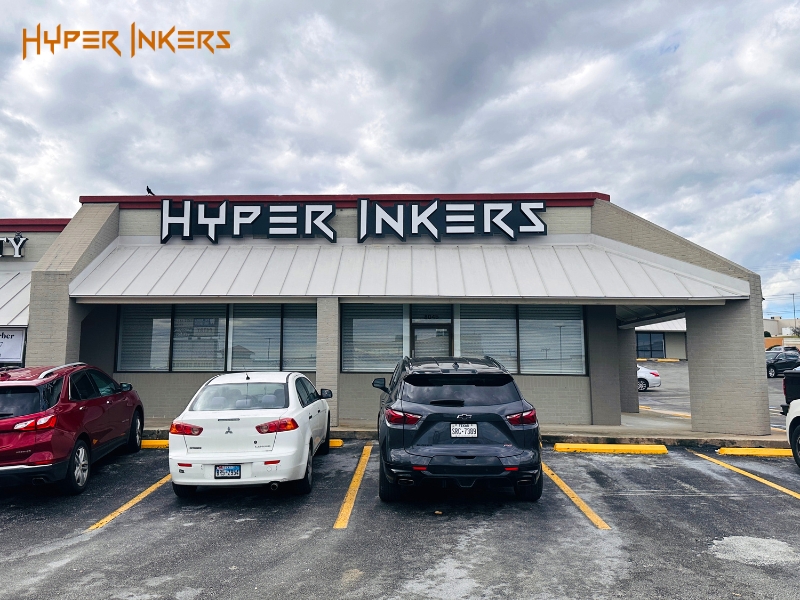
Book a consultation to have your design sized in person, and bring your reference along so the artist can set the dimensions against your skin before anything is drawn.
FAQs
How to Measure Tattoo Size Correctly?
- Measure the width and height at the design’s maximum points.
- The longer of those two numbers is the size an artist will quote.
- Some shops also multiply height by width to get a square inch figure used for pricing.
- Consider how body curvature affects appearance.
- Use reference objects like coins or cards to visualize the size on your skin.
How Do You Convert Tattoo Sizes From Inches to Centimeters?
Multiply inches by 2.54 to get centimeters. A 2 inch tattoo is about 5 cm, a 4 inch tattoo is about 10 cm, and a 6 inch tattoo is about 15 cm. Most studios outside the United States quote in centimeters, so bringing both numbers to a consultation saves a conversion mid-conversation.
Is a 2×2 Tattoo Big?
No, a 2×2 inch tattoo is not big, because 2 inches is roughly the width of a credit card. It suits minimalist designs or short text.
What Size Tattoo Can You Get for $200?
Around $200 buys a 3 to 4 inch tattoo at most US shops, which covers a detailed symbol, a small portrait, or a short piece of script. At $400 the same budget stretches to roughly 4 to 5 inches, enough for shading and a background. Both figures assume black and grey work, since color adds time to the same dimensions.
How Do You Describe a Tattoo Size to an Artist?
Give the longest edge in inches or centimeters, name the body part it is going on, and say whether the design has fine detail. Those three pieces let an artist size the stencil without seeing your reference. Comparing it to a familiar object, such as a credit card or your palm, works as a backup when you do not have a number.
How Long Does a 3×3 Tattoo Take?
A 3×3 tattoo usually takes 1–2 hours. Simple black linework might take less than an hour, while complex designs with color or shading can take longer.
Choosing the right tattoo size involves more than just picking dimensions. It is about aligning your vision with design, placement, budget, and lifestyle. While smaller tattoos offer convenience and discretion, larger ones open the door to artistic complexity and impact.
A consultation with a professional artist is the most valuable step in deciding your ideal tattoo size. At Hyper Inkers, our experienced team will help tailor your design to the right size and placement, ensuring a tattoo you’ll love for years to come.